Blog

6 Functions and Advantages of Helpdesk and Ticketing Features for Customer Service
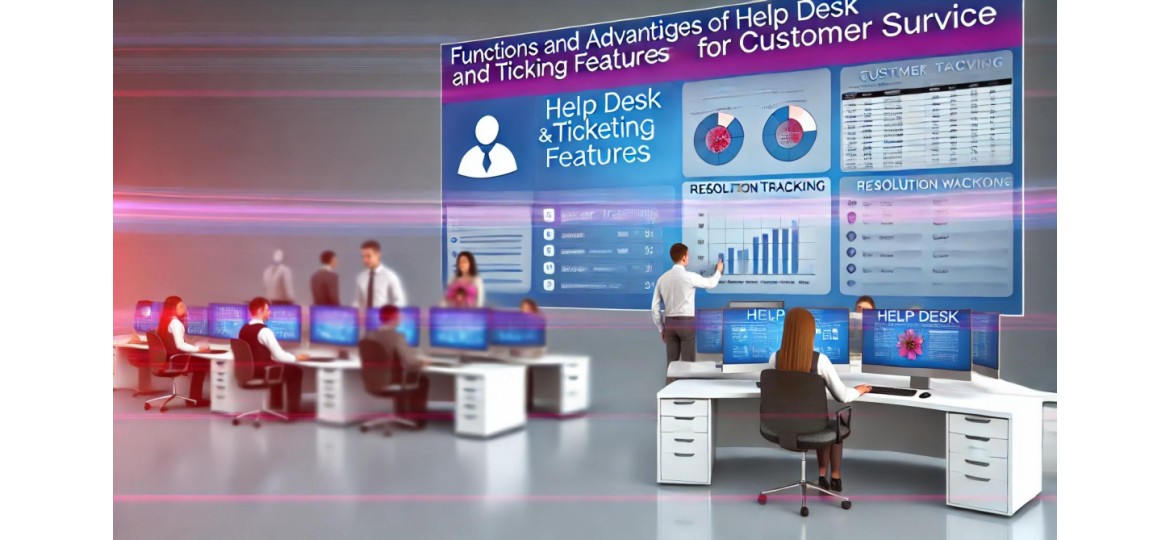
In today's digital era, quality customer service is a key factor in maintaining customer loyalty. One of the most effective ways to deliver excellent service is by using helpdesk and ticketing features. These tools provide advanced solutions for addressing customer inquiries and complaints while enhancing business responsiveness. This article explores the functions and advantages of helpdesk and ticketing features for customer service.
What Are Helpdesk and Ticketing Systems?
A helpdesk is a centralized system designed to manage, track, and resolve customer requests, including technical issues, general inquiries, and complaints. It is often equipped with essential tools such as chatbots, email, and phone support to provide prompt and efficient assistance to customers.
On the other hand, a ticketing system is an integral part of a helpdesk that allows companies to convert each customer request into a "ticket," which can then be tracked and monitored until resolved. This system facilitates better workflow management and helps customer service agents prioritize requests based on urgency.
Key Features of Helpdesk and Ticketing for Customer Service
Below are the main features and advantages of helpdesk and ticketing systems in customer service:
1. Organized Request Management
The ticketing feature ensures that every customer request, whether received via email, phone, or chat, is converted into a documented ticket. Each ticket is assigned a unique reference number, enabling agents to easily track the status of customer requests and process them promptly.
The primary goal of this feature is to prevent overlapping issues, ensure no customer request is overlooked, and streamline communication channels within a single platform.
2. Tracking and Monitoring Reports
A ticketing system also facilitates tracking the status of each customer ticket. Tickets are typically labeled with statuses like "new," "in progress," or "resolved," allowing agents and customers to monitor the progress of issue resolution.
This feature supports better responsiveness to customer issues and provides management with an overview of agent performance, helping to identify areas for improvement.
3. Issue Categorization
Each ticket can be categorized based on the type of issue or urgency level, allowing agents to prioritize more critical or immediate requests. For instance, customer forms often include urgency options like "low," "medium," or "high."
This feature enhances efficiency, especially when there is a high volume of requests, by ensuring critical issues are addressed first, reducing resolution time for complex problems, and simplifying the grouping of similar issues for long-term improvements.
4. Process Automation
Helpdesk systems often include automation features to lighten agents' workloads. For example, when a customer creates a ticket, the system can automatically assign it to the most relevant agent or send an automated acknowledgment to the customer confirming their request is being processed.
Automation minimizes the time needed to allocate tasks to agents and reduces the risk of human error in ticket management.
5. Integration with Knowledge Base
Helpdesk systems are usually integrated with a knowledge base, allowing agents to access relevant information quickly. This integration accelerates issue resolution by providing instant solutions, reduces dependence on senior staff for recurring problems, and encourages customer self-service by offering automated solutions from the knowledge base.
6. Reports and Analytics
Helpdesk and ticketing systems also come with robust reporting and analytics capabilities. Businesses can track key metrics such as ticket resolution time, the number of tickets handled by each agent, and customer satisfaction levels.
These insights are crucial for assessing customer service performance, identifying areas for improvement, and making data-driven decisions to enhance service quality.
Conclusion
The functions and advantages of helpdesk and ticketing features are invaluable for delivering excellent customer service. They help organize customer requests, improve workflow efficiency, and provide actionable insights for continuous improvement.
For businesses seeking integrated software with helpdesk and ticketing features, Soltius offers reliable IT solutions tailored to your needs, including CRM, SAP, ERP, and more.
Other News