Blog

6 Uses of Supply Chain Manufacturing Software, You Must Know!
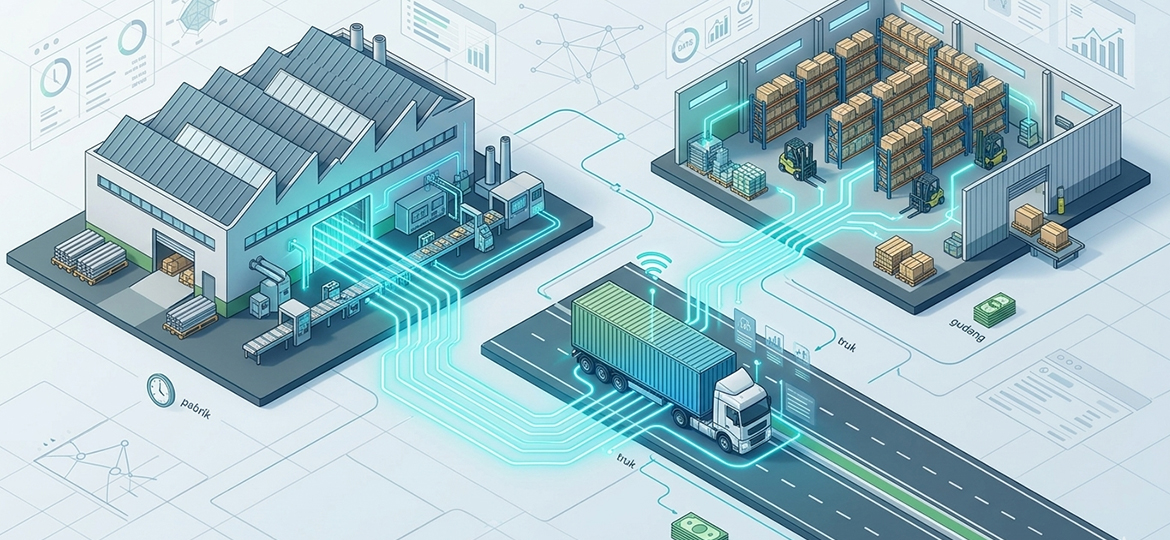
Does your factory often halt production due to late raw materials? Or is your warehouse full of goods that are choking the company's cash flow? Managing the supply chain from procurement, assembly, to distribution is indeed prone to bottlenecks. Especially if stock recording is messy and there is no synchronization between divisions. The effect is clear: swelling operational costs.
Imagine this supply chain as city traffic. Without traffic lights and GPS, the streets would surely be in total gridlock. This is where SCM Software comes in as your smart navigation system. This system is not just a digitalization trend, but a strategic investment to reduce logistics costs and optimize production capacity. Thanks to real-time data synchronization, management can calculate more precisely, cut out wasteful processes, and stabilize daily supplies.
Why is the Manufacturing Sector Increasingly Reliant on SCM Software?
Traditional supply chain practices relying on spreadsheets (like Excel) have proven vulnerable to human error and slow in data updates, especially when production volumes and SKU variations increase. Therefore, the manufacturing industry is now shifting towards centralized automation systems. SCM Software serves as a Single Source of Truth that integrates procurement data, production floor schedules, and warehousing without delay.
This transition from a manual system to centralized automation provides vital technical advantages, including:
-
Reorder Point Automation: Automatic creation of Purchase Orders (PO) when raw material stock hits the minimum threshold.
-
Real-Time Synchronization: Eliminates periodic data updates with instant interdepartmental visibility.
-
Lead Time Anomaly Detection: An early warning feature to anticipate delivery delays from suppliers.
-
Processing Scalability: Capable of accurately managing tens of thousands of transaction data rows without the need to add data entry staff.
6 Key Benefits of Supply Chain Management (SCM) Software in the Manufacturing Industry
The implementation of a digital-based supply chain management system has a direct impact on the factory's financial and operational performance. Here are six technical benefits that make this software highly essential for manufacturing companies:
-
Cuts Operational and Logistics Costs (Cost Efficiency) Shipping and storage costs are often the largest expenditure components in manufacturing. With an SCM system, companies can optimize distribution routes, consolidate shipments, and select the most efficient transport fleets based on rates and capacity.
-
Precise Warehouse & Inventory Management Control Poor inventory management has the potential to tie up the company's working capital in the form of dead-stock or, conversely, trigger material shortages during high demand. SCM applications provide strict and automated inventory control parameters. Some precise controls offered include:
-
Dynamic Safety Stock Calculation: Adjusts reserve stock based on supply fluctuations.
-
Automatic FIFO/FEFO Implementation: Ensures that materials that enter first or are approaching expiration are used first.
-
Preventing Overstock: Avoids the accumulation of excess raw materials that consume the physical capacity of the warehouse.
-
Accurate Demand Forecasting Instead of relying on instinct or guesswork when composing the Master Production Schedule, SCM software processes historical sales data algorithmically. This system analyzes seasonal trends and previous purchasing patterns to generate precise market demand projections. The accuracy of this demand forecasting ensures production volumes align with actual market needs. This directly prevents scenarios of under-production (loss of potential sales) as well as over-production (waste of material assembly costs).
-
Ensures On-Time Delivery Delays in order fulfillment can damage a factory's credibility in the eyes of distributors and end customers. An SCM system automates the order processing workflow, starting from verifying the availability of finished goods in the warehouse to scheduling expeditions. This standardized process minimizes administrative delays and cuts down the order cycle time. As a result, the On-Time Delivery (OTD) percentage increases sharply, which is directly proportional to increased customer satisfaction and loyalty.
-
Real-Time End-to-End Visibility The lack of data synchronization between divisions (information silos) is the main source of operational miscommunication. SCM software breaks down these barriers by providing a single centralized monitoring dashboard to track all material status movements. Management can track the flow of goods end-to-end on one screen, including:
-
Delivery status of raw materials from suppliers.
-
Component assembly progress on the production floor (Work-in-Process).
-
Tracking position of finished products being distributed to consumers.
-
Boosts Profit Margins and Scalability The six points above create a synergy effect that culminates in one final result: an increase in operational Return on Investment (ROI). Factory profit margins will be boosted due to decreased logistics costs, minimized material waste, and increased sales volumes from on-time deliveries. Furthermore, a structured database system makes it easier for companies to scale their business (scalability). Factories can expand, add new production lines, or open additional warehouse facilities without facing swelling supply chain administrative management costs.
How to Choose the Right SCM Software
Implementing a digital supply chain system requires a strategic investment of time and budget. Choosing a service provider vendor must not be done carelessly; the system must be able to adapt to your factory's workflow specifications.
Here are the key technical criteria that must be evaluated before you decide to invest in SCM software:
-
ERP Integration Compatibility: Ensure the software has seamless API integration capabilities with the Enterprise Resource Planning (ERP) or accounting systems already running in the company.
-
Architectural Scalability: Choose a platform (ideally cloud-based) that allows for the addition of database capacity, user licenses, or new feature modules without the need to overhaul the initial infrastructure when the factory expands.
-
Intuitive Interface (UI/UX): Advanced analytical features will not be optimal if they are difficult for field staff to operate. A short learning curve is crucial to accelerate the process of technology adoption by employees.
-
Technical Support Guarantee (Service Level Agreement): Ensure the vendor provides an uptime guarantee commitment and responsive technical support services to handle system issues (such as bugs or server downtime) quickly.
Conclusion
The digitalization of supply chain management has now shifted from being merely an optional extra to a mandatory operational standard for the manufacturing industry to win market competition. Through procurement automation, improved demand forecasting accuracy, to real-time data visibility, SCM Software has proven effective in reducing logistics costs while boosting production efficiency.
Do not let the inefficiency of manual recording continue to erode your factory's operational profit margins. If you are ready to eliminate bottlenecks and take full control of your inventory, Soltius is here as the right strategic partner. As a leading IT solutions and digital transformation provider, Soltius offers the implementation of world-class SCM Software that can be tailored to the complexity of your manufacturing workflow. Contact the Soltius expert team now to consult and schedule a demo session so you can see firsthand how our system works to optimize your business! Click here for details: https://www.soltius.co.id/id/solutions-by-products/supply-chain-management
Other News