Blog

Enhancing Transaction Security and Fraud Detection with the Capabilities of SAP Business AI
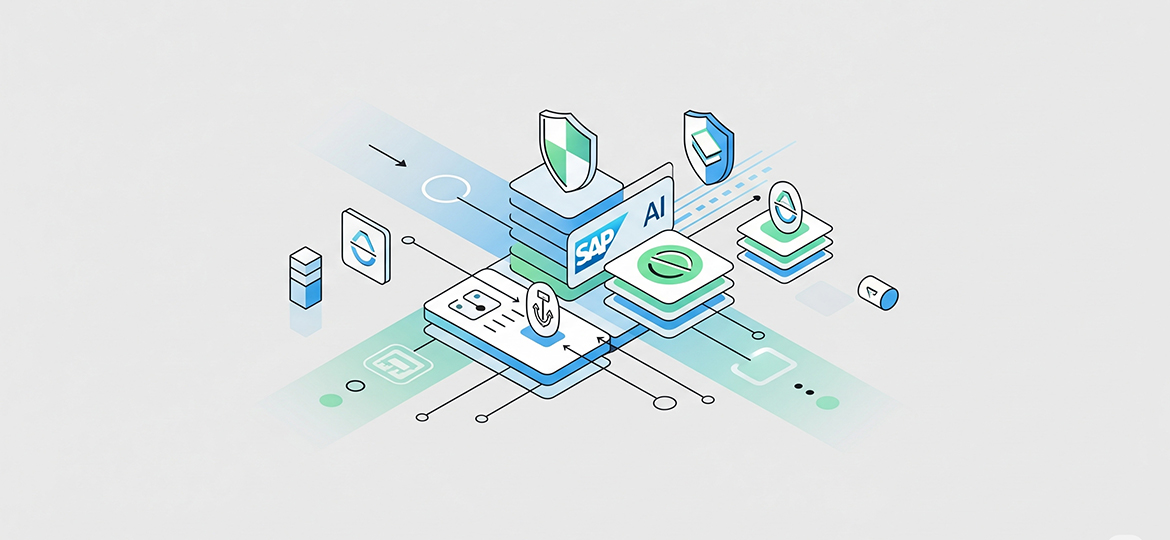
The acceleration of digital transformation is a double-edged sword. On one hand, it opens up numerous benefits and opportunities; on the other, it has led to a rampant and increasingly concerning rise in fraudulent activities.
This has become a daunting challenge for business owners. However, many preventive measures can be taken, one of which is the implementation of SAP Business AI, which has various capabilities, including protecting data and transactions from fraud, cyberattacks, and data misuse.
With SAP Business AI, your business system can even think faster than digital criminals, enabling early detection. So, what exactly are the capabilities of SAP Business AI in helping to enhance transaction security and fraud detection? Let's delve deeper in the following review!
The Role of SAP Business AI in Enhancing Security and Detecting Fraud
SAP Business AI plays an active role in helping to improve security by recognizing, analyzing, and responding to potential fraud through an intelligent approach. Here are some of its key capabilities that can help your company maintain comprehensive transaction security:
1. Predictive Analytics and Machine Learning SAP Business AI utilizes predictive analytics and machine learning technology to learn transaction patterns over time. A system like this, of course, does more than just read raw data.
Furthermore, it also analyzes habits, anomalies, and behavioral patterns that deviate from normal transactions. This makes it easier to identify potential fraud and prevent financial losses.
2. Real-Time Transaction Monitoring SAP Business AI can help you monitor transactions in real time. This means that every activity occurring within the system can be immediately analyzed and acted upon. When suspicious activity is detected, the system will send automatic alerts to the responsible team. Thus, remediation can be carried out without waiting for manual reports.
A swift response to potential fraud can minimize losses caused by slow detection. Not only that, but real-time monitoring also provides a sense of security, as the system is capable of safeguarding transaction data at all times.
3. Integration with Financial and Operational Systems Direct integration with various modules in the SAP ecosystem is a key advantage of SAP Business AI. This integration allows the system to easily access data across departments. Additionally, this integration can provide a clearer picture of the company's financial and operational processes. It can also detect potential fraud arising from coordination gaps between departments.
4. Automated Risk Scoring Based on Historical Data SAP Business AI can automate the assessment process using historical data and relevant transaction variables. Each transaction can be assigned a score based on its risk level, allowing the finance team to prioritize follow-ups on transactions with the highest scores.
The internal control system can be strengthened, and you can also achieve more efficient resource allocation. Therefore, instead of manually checking all transactions, you can focus only on those that are genuinely suspicious, increasing the efficiency and accuracy of the fraud detection process.
Tips for Implementing SAP Business AI for Transaction Security
Implementing SAP Business AI also signifies a change in work processes. To ensure the implementation is effective, here are some tips that can serve as a guide:
1. Conduct a Security Audit and Identify Fraud-Vulnerable Processes Before integrating SAP Business AI, companies should conduct an internal audit of their existing systems and transaction flows. The goal is to identify vulnerable points that are often exploited by fraudsters, such as manual approval processes, data duplication, or weaknesses in verification.
A clear picture of the existing risks will make the SAP Business AI implementation process more effective. The system can be configured to monitor the most critical areas first, so its benefits are felt more quickly and tangibly in business operations.
2. Involve the Team Implementing AI in a security system is not solely the responsibility of the IT division. Involve the finance, audit, compliance, and even legal teams in the planning and oversight. This collaboration is essential for defining business rules, risk tolerances, and escalation procedures when potential fraud is discovered.
The involvement of all teams will enrich the system's perspective and accelerate the user adoption process. Moreover, inter-departmental cooperation helps in forming a more comprehensive security strategy.
3. Ensure Training and Support for Users Advanced technology will not deliver maximum results if it is not supported by the understanding and skills of its users. For this reason, comprehensive training for the team that will be using SAP Business AI is a must.
Also, ensure that internal or external support is readily available to assist when users encounter challenges. Knowledgeable users will be more confident in making insight-based decisions and will be able to utilize the system's features optimally.
Digital transaction security is now a top priority for companies that want to maintain operational stability and customer trust. The growing threat of fraud demands a solution that is not just reactive, but also proactive and adaptive to the dynamics of data.
If you are a business owner concerned about the threat of fraud and are planning to implement SAP Business for your business, Soltius Indonesia can be your partner. As an official SAP partner, we ensure full support from the planning stage until your team is ready to use the SAP Business AI system. Want to learn more about our available services? Contact our team now, and let's discuss which services you need most.
Other News