Blog

Managing an Eco-Friendly Restaurant with the Help of an Energy & Waste Management System
Have you ever looked at this month's restaurant electricity bill and instantly felt weak? Not to mention the sight in the back kitchen area at the end of a shift, where trash cans are overflowing with wasted raw ingredients. It feels like throwing wads of cash straight into the bin, doesn't it?
We have to agree, managing a restaurant today is like sailing in a stormy sea. Culinary business managers are often caught between a rock and a hard place: mercilessly swelling energy costs and the problem of accumulating raw ingredient waste that silently eats away at the initial capital.
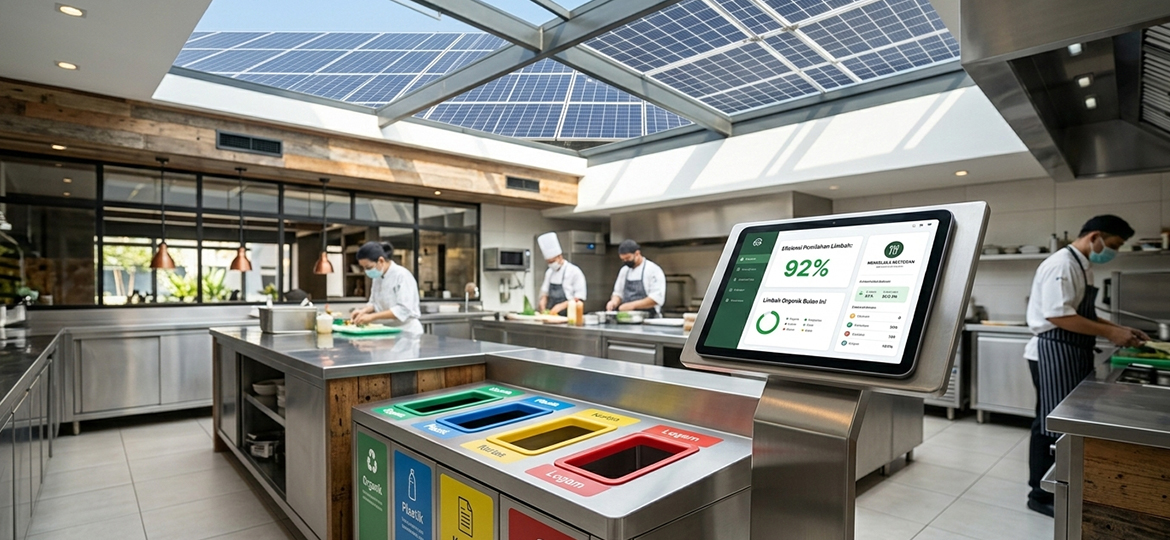
However, there is a way out of this storm. The implementation of an Energy & Waste Management System is not just a green gimmick or a mere eco-friendly labeling trend. This system is like the central nervous system in your restaurant's body; it monitors, regulates, and ensures that not a single watt of electricity or a single gram of food is wasted. It is a precise and measurable strategy to drastically cut costs while saving the earth we stand on.
Why Do Restaurants Desperately Need an Energy & Waste Management System?
Running a commercial kitchen without strict supervision is like drawing water with a leaky bucket. No matter how much revenue flows in from customer queues, net profit will continue to slowly drip away and disappear due to invisible waste.
This is why the presence of an Energy & Waste Management System is no longer a luxury, but a line of defense for your business. Broadly speaking, this system saves your restaurant from two major threats:
-
Financial Leaks: Transforming swollen operational costs into enjoyable profit margins.
-
Regulatory Risks: Ensuring the business runs safely in accordance with increasingly strict government laws.
Let's dissect deeper into the two underlying critical factors:
Critical Facts on Food Waste in Indonesia
Did you know that the piles of food waste in the kitchen contribute to massive material losses? This problem is far more detrimental than just a piece of vegetable dropping on the floor.
According to data from the National Waste Management Information System (SIPSN), organic waste, especially food waste, still dominates and chokes the capacity of our landfills (TPA). For restaurant managers, food waste creates a bitter domino effect:
-
Evaporating Capital: Fresh ingredients bought at high prices end up rotting without ever touching the customer's table.
-
Double Burden: You have already lost money buying the ingredients, and then you have to pay extra fees for the service to haul away the piles of trash.
Government Energy Efficiency Regulations
The other side of the coin is the electricity bill. Lights left on in the warehouse, overly extreme air conditioning, and freezers working without regular maintenance are "energy vampires" that silently suck out your restaurant's cash every night.
The government is no longer staying silent witnessing this waste. Through the latest regulation, Minister of Energy and Mineral Resources Regulation (Permen ESDM) Number 8 of 2025, energy efficiency standards are being tightened. This rule is highly tactical; it doesn't judge by business type (like specifically mentioning "restaurants"), but directly highlights total energy consumption.
For those of you managing large-scale restaurants, franchise chains, or restaurants integrated within commercial buildings/hotels, pay attention to this criterion: If your total energy consumption reaches 500 Tonnes of Oil Equivalent (TOE) per year, then the implementation of energy management becomes an absolute obligation.
How to adapt without panicking? Restaurants can start imitating global standard principles like ISO 50001. Adopting this standard gives you a double strategic advantage:
-
Measurable: Having clear parameters regarding which kitchen areas or equipment are the most power-hungry.
-
Anticipatory: Securing the business from potential regulatory sanctions, while protecting your restaurant's financial lifeline from fluctuations in basic electricity tariffs.
Steps to Optimize the Energy Management System in a Restaurant
Reducing the electricity bill does not mean you have to turn off the AC and sacrifice customer comfort. True efficiency focuses on optimizing equipment workload and eliminating unproductive power waste.
To cut operational costs measurably, you need a systematic and data-driven technical approach. Here are three implementation steps to optimize the energy profile in your kitchen and dining areas:
-
Conduct Regular Energy Audits: An energy audit is a process of systematic inspection and analysis of energy flows within the restaurant's operations. The goal is to identify areas or equipment with the highest power consumption levels (high energy intensity) so you can map efficiency accurately. Focus the checking parameters on:
-
The performance of refrigerator compressors, chillers, and cold storage to ensure constant temperatures in accordance with food safety standards.
-
Analysis of the electrical load curve during peak operational hours compared to the base load during quiet hours.
-
Detection of insulation leaks on the doors of raw ingredient cooling areas.
-
-
Implement IoT (Internet of Things) Technology: Relying on manual controls often triggers human error leading to power waste. The integration of IoT-based devices enables real-time automation of energy monitoring and control. Examples of applied technology investments that accelerate Return on Investment (ROI):
-
Smart Lighting: The use of occupancy sensors in warehouse or toilet areas that automatically cut off the lighting circuit when no movement is detected in the room.
-
Smart Thermostats: Air conditioning systems (HVAC) capable of adjusting cooling capacity based on the density or number of people in the room.
-
-
Optimization and Maintenance of Commercial Kitchen Equipment: Commercial cooking equipment is one of the main consumers of electricity. Uncalibrated or aging machines are prone to thermal degradation, where electrical power is wasted as radiant heat instead of being optimally utilized for the cooking process. Optimization steps include:
-
Gradual equipment upgrades using machines with high energy efficiency ratings (such as Energy Star certification).
-
Implementation of preventive maintenance, such as regularly cleaning the condenser coils on freezers. Smooth air circulation keeps the machine operating at the minimum power consumption ratio recommended by the factory.
-
Implementing a Waste Management System (Zero Waste to Landfill)
After successfully taming electricity consumption, the next operational challenge is reducing the volume of waste coming out of your kitchen's back door. Today, the Zero Waste to Landfill approach has transformed from a mere environmental trend into the gold standard for efficient modern restaurants.
Continuously throwing all kitchen waste indiscriminately into landfills is like sweeping dirt under the rug; the problem isn't truly solved, but merely accumulates and waits for the time to explode into expensive waste retribution costs. A good Energy & Waste Management System will force us to see piles of food waste not as "trash," but as misplaced resources.
To realize clean and low-waste operations, apply the following four pillars of waste management in your restaurant:
-
Strict Inventory Management (FIFO Method): The best waste prevention always starts at the warehouse door. Apply the First In, First Out (FIFO) stock rotation, where the raw ingredients that enter first must be processed first. This discipline drastically reduces the number of expensive food items wasted due to rotting or expiring in the corner of the chiller.
-
Separation of Organic and Inorganic Waste: This is an absolute foundation. Provide trash cans with striking color codes from the prep area to the dishwashing station. Separating organic vegetable scraps from plastic packaging will prevent cross-contamination, so inorganic materials retain their sale value for recycling.
-
Independent Composting Program: Leftover vegetable scraps, fruit peels, and coffee grounds shouldn't rot in landfills and produce toxic methane gas. You can process them directly using a compact commercial composter machine, or partner with a third party (organic waste management vendor) who will periodically pick up the waste to be turned into fertilizer.
-
Collaboration with Food Banks (Food Rescue): Often, restaurants have cooked ingredients or fresh bread that remain unsold at the end of the operational day. Instead of throwing them into the trash, channel this highly consumable food through local Food Bank organizations.
Positive Impact on Profitability and Brand Reputation
Efforts to suppress energy consumption and eliminate waste to landfills certainly provide commensurate rewards. This is where the sweetness of sustainability investments lies. The "eco-friendly" label is not just cosmetic makeup to beautify your restaurant's social media, but an adhesive magnet for modern customer loyalty.
According to various culinary business experts, this operational efficiency is like injecting fresh blood directly into your profit margins. Drastically reduced overhead costs make the restaurant's cash flow much more resilient against fluctuations in staple food prices. For reference, [VALID DATA NEEDED: Insert expert/journal quote regarding the average percentage increase in restaurant profit margins after implementing energy efficiency].
In terms of reputation, this green initiative is a very sharp green marketing strategy. Consumers today are highly critical and selective. Note the following consumer trends:
-
Ethical Purchasing Power: Gen Z and Millennials dominate the culinary market today, and they do not hesitate to dig deeper into their pockets for brands proven to hold environmental responsibility values.
-
Organic Publicity: Restaurants with tangible sustainability programs (zero waste, food donations) often receive voluntary positive reviews from customers and free media coverage (earned media).
The journey towards an efficient, economical, and green restaurant operation does not have to be completed overnight. The first and most crucial step managers must take is to start tracking data—whether it's kilowatt electricity consumption figures or your daily waste tonnage—with precision. Remember the golden rule in management: What you can measure, you can definitely control.
It's Time to Take Control of Your Business!
Do not let your restaurant's profits continue to evaporate in vain along with the heat of the kitchen ovens and piles of food waste. It is time you switch to smart operational management based on cutting-edge technology. Contact Soltius today to consult on the implementation of an Energy & Waste Management System specifically designed to maximize your culinary business's efficiency!
Other News