Blog

Managing Heavy Equipment Logistics: The Crucial Role of SAP TM in Mining Operations
By: Senior SEO & Supply Chain Specialist
Observing global commodity price dynamics from 2024 heading into 2025 feels like riding a roller coaster. At this point, we must agree on one thing: efficiency is no longer just a "nice-to-have" option it has become an absolute prerequisite for survival.
Let’s be honest about mining logistics. Mobilizing "iron giants" like the PC2000 Excavator or the HD785 Dump Truck to the remote corners of Indonesia presents extraordinary challenges. This isn't just about sending an online shopping package. The level of complexity is equivalent to moving an entire house through winding narrow paths; a slight miscalculation and that "house" could get stuck or even collapse in the middle of the road. The risks are high, and the costs are expensive.
This is where I want to invite you to look at SAP Transportation Management (SAP TM) from a different perspective. Do not view it merely as standard software, but see it as a primary strategy to untangle the complexity of your heavy equipment logistics. Implementing this system is the key to slashing operational inefficiencies and ensuring that super-strict regulatory compliance is met with precision.
Definition of SAP TM and Its Connectivity with Mining Operations
Before diving into the technicalities, it is important to align our understanding. In many implementation discussions I have facilitated, a common misconception arises that SAP TM is merely a shipment tracking tool.
What is SAP TM, Really? In technical terms, SAP TM is an end-to-end supply chain orchestration platform. It does not just find routes; it calculates the most efficient costs, physical vehicle capacity, and regulatory compliance to ensure your heavy equipment journey is smooth without legal hurdles.
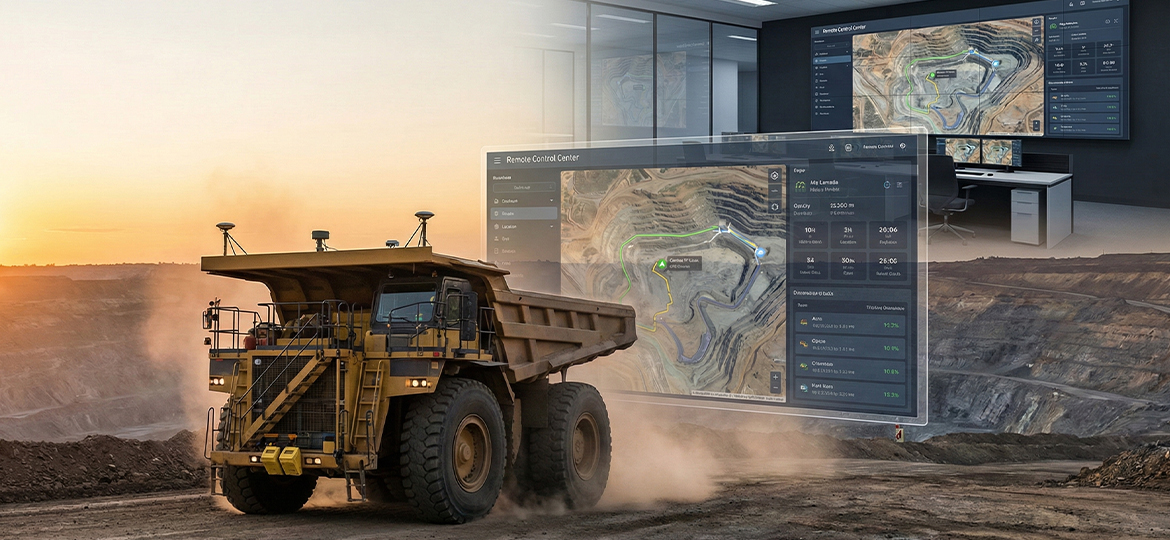
Particularly within the complex mining ecosystem, the role of SAP TM is crucial. It functions as a bridge connecting the ERP/financial systems with physical logistics operational administration in the field.
The result? Your data flow remains uninterrupted. The business decisions you make are not based on assumptions, but on precise data. With this transformation, your mining operations are not just ready to survive, but also possess the strong capital needed to excel in facing digitalization trends in 2025.
Anatomy of Heavy Equipment Logistics Challenges in Indonesia (2024-2025)
Field experience shows that moving heavy equipment in Indonesia is one of the most difficult logistics operations in the world. Here is a breakdown of the main challenges:
Geographical & Infrastructure Complexity Infrastructure challenges remain the primary obstacle. Many access routes to mining sites in Kalimantan or Sumatra consist of Class III roads or non-status roads not designed for loads of hundreds of tons. The risk of bridge damage or road collapse necessitates detailed route surveys before any shipment is conducted.
Cargo Characteristics: OOG and Break Bulk Heavy equipment is categorized as Out of Gauge (OOG) or Break Bulk cargo because its dimensions exceed standard container limits.
-
OOG: Cargo that slightly exceeds standard container dimensions (e.g., flat racks).
-
Break Bulk: Cargo so large it must be loaded directly onto the ship's deck (e.g., a 40 m³ capacity bucket).
Errors in load planning are not only a safety risk but also a financial one. Surcharges for OOG cargo can be highly volatile, and without a robust management system, companies often pay significantly more than the market price.
The Compliance Barrier This is the part often overlooked but most at risk. Mining logistics operations in Indonesia are bound by strict regulations. Failure to comply can lead to equipment seizure or operational shutdowns.
-
Mining Service Business License (IUJP): For those using logistics vendors, it is mandatory to ensure they hold an IUJP. Based on Ministry of Energy and Mineral Resources regulations, mineral and coal transportation activities are part of core mining services. Vendors without an IUJP (KBLI Code 09900) are operating illegally in mining areas.
-
ODOL Regulations and Dispensation Permits: Almost all heavy equipment violates dimensions and Maximum Axle Load (MST) limits on public roads (Law No. 22 of 2009). Therefore, these shipments fall under the "Special Goods Transport" category, requiring a road dispensation permit.
-
Mandatory Police Escort (Patar): In accordance with Government Regulation (PP) No. 43 of 1993, vehicles with excessive dimensions must be escorted by the Indonesian National Police. This is not optional. Escorts provide road priority and prevent accidents with other road users.
Solution Architecture and SAP TM Capabilities
How does SAP TM answer these challenges? Here are the key capabilities relevant to the mining industry:
Vehicle & Cargo Master Data The success of SAP TM implementation in mining lies in master data accuracy.
-
Freight Unit (Cargo): Material data for equipment must include dimensions (L x W x H), gross weight, and center of gravity.
-
Vehicle Resource: Lowbed truck data must include axle configuration and load limits per axle. This is crucial for automated road class compliance calculations.
Strategic Freight Management (SFM) In the niche heavy equipment logistics market, prices are highly volatile. The SFM feature allows mining companies to conduct digital tenders (freight procurement) to IUJP-holding vendors. The system can compare bids based not only on price but also on the vendor's capacity and track record.
Project and Maintenance Integration Logistics does not stand alone. In mining, logistics serves two masters: Projects (Construction) and Operations (Production).
-
SAP Project System (PS) Integration: Mobilization costs for opening new sites can be charged directly to the relevant project code (WBS Element), facilitating asset capitalization.
-
SAP Plant Maintenance (PM) Integration: Spare parts requirements from equipment maintenance Work Orders directly become transportation requirements in TM. This ensures Physical Availability (PA) remains high.
Conclusion
Managing heavy equipment logistics in Indonesia presents multi-dimensional challenges ranging from geographical complexity and strict IUJP regulations to non-negotiable cost efficiency pressures. Facing the dynamics of 2025 with a manual approach is no longer a viable option.
Implementing SAP Transportation Management is a strategic transformation step to make the supply chain more resilient through Visual Load Planning and measurable cost transparency. Let’s discuss how Soltius’s experience can align this technology with your unique operational needs, ensuring your business is ready to go further.
Other News