Blog

Understanding Procure-to-Pay Process Automation in Manufacturing with SAP Build Process Automation (iRPA)
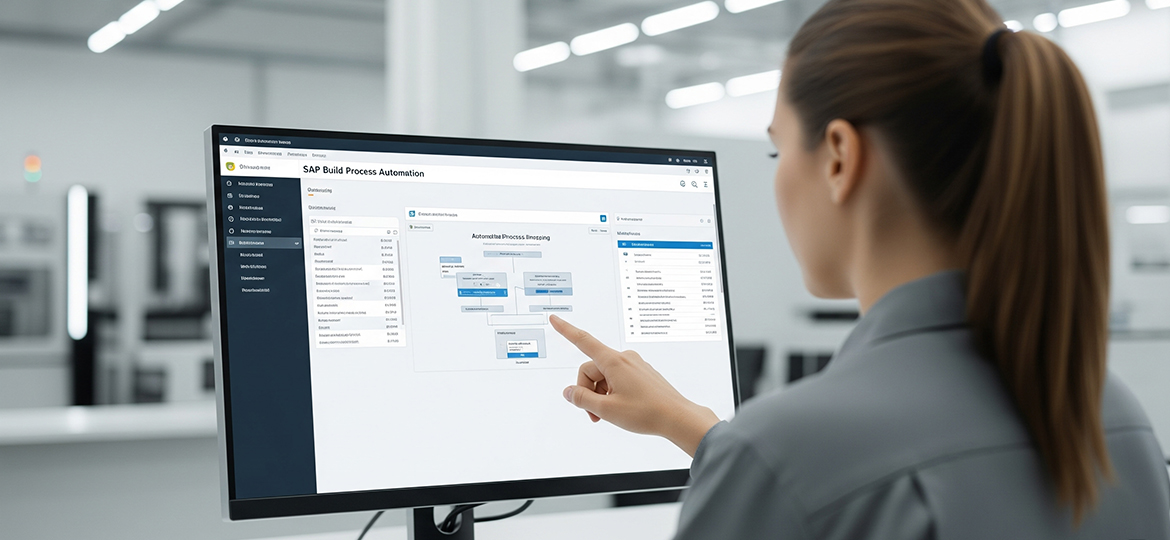
The manufacturing industry is constantly evolving, with a strong focus on improving operational efficiency, maintaining quality, and ensuring timely production. One of the most time-consuming processes in manufacturing operations is procure-to-pay, or P2P.
To address this challenge, the SAP Build Process Automation solution, powered by iRPA technology, emerges as the answer for the manufacturing industry's needs. So, how does the automation of the procure-to-pay process in manufacturing with SAP Build Process Automation (iRPA) work?
What is Procure-to-Pay?
For those who may be unfamiliar, P2P or Procure-to-Pay refers to the series of activities a company undertakes from procuring goods and services to making payments to suppliers or vendors. The P2P workflow integrates purchasing, goods receipt, and payment into a single, streamlined process.
The P2P process also includes the handling of all related documents, such as purchase requisitions, purchase orders, goods receipts, and invoices. This extensive Procure-to-Pay cycle can be very time-consuming, necessitating a system that can accelerate the process.
Getting to Know SAP Build Process Automation and iRPA
SAP, which stands for System Application and Product in Data Processing, is a tool used by companies to help manage various business processes, from production, logistics, and HR to finance and customer service.
The primary benefit of SAP is its ability to manage all business activities within a single centralized system. In the manufacturing industry, this tool is incredibly useful for the company's operational processes. Company activities that can be managed with SAP include:
-
Creating order and purchase records
-
Warehouse inventory management
-
Processing employee payroll
-
Recording all financial transactions
-
Production planning
-
Analyzing sales and production cost data
By using SAP, all these industrial activities can collaborate within a single, centralized platform, eliminating the time-consuming need for manual data transfer.
Meanwhile, iRPA stands for Intelligent Robotic Process Automation, which consists of software bots used to automate business processes. iRPA not only mimics manual tasks performed by humans but also possesses intelligent capabilities such as reading documents, understanding text, and making decisions based on company data.
With the high level of accuracy that iRPA offers, combined with SAP, manufacturing companies can automate various processes within the P2P cycle, leading to more efficient company operations.
Implementation of P2P Automation
Here are several P2P processes that can be automated:
-
PR Creation The system can detect minimum stock levels and automatically generate a Purchase Requisition (PR) without human intervention.
-
Automated Approval Based on the PR or the type of goods, the system will send an approval notification to the relevant manager. If the requirements are met, a Purchase Order (PO) will be created automatically based on the established workflow.
-
Automated Goods Receipt When a vendor sends an Advanced Shipping Notice (ASN), the system will automatically schedule the goods receipt and match the shipping data.
-
Automated 3-Way Matching The P2P system automatically matches the Purchase Order (PO), goods receipt, and invoice. If everything aligns, the invoice is approved for payment without any manual intervention.
-
Payment The P2P system can schedule payments based on agreed-upon due dates with vendors to avoid late payment penalties and take advantage of early payment discounts.
Benefits of P2P Automation
Implementing SAP Build Process Automation in the P2P cycle offers various advantages for manufacturing operations, including:
-
Time Efficiency Operational processes in manufacturing that were once done manually can now be completed much faster with the combination of SAP and iRPA.
-
High Accuracy In addition to time savings, the risk of manual data entry errors is significantly reduced because the robots operate based on logic and consistency. This high accuracy helps prevent operational mistakes that often occur with manual processes.
-
Transparency Every process in the manufacturing operation is automatically recorded, facilitating easier audits and transaction tracking.
-
Operational Cost Savings By using SAP and iRPA in the P2P process, fewer administrative personnel are required, which means the company can achieve long-term operational cost savings.
-
Improved Vendor Relationships The SAP system enables timely payments, which can increase vendor trust and create opportunities for special discounts.
With an integrated system, you will no longer experience the repetitive operations, duplicate data, and human error that are common in manufacturing operations. The combination of SAP and iRPA provides companies with greater ease and control over all their operations.
As an official SAP partner in Indonesia, Soltius has assisted numerous companies in adopting automation systems, particularly in the manufacturing industry. With the automation of the procure-to-pay process in manufacturing using SAP Build Process Automation (iRPA), your manufacturing operations can become faster and more precise.
Other News