Blog

5 Fatal Mistakes When Migrating to RISE with SAP And Practical Strategies to Avoid Them
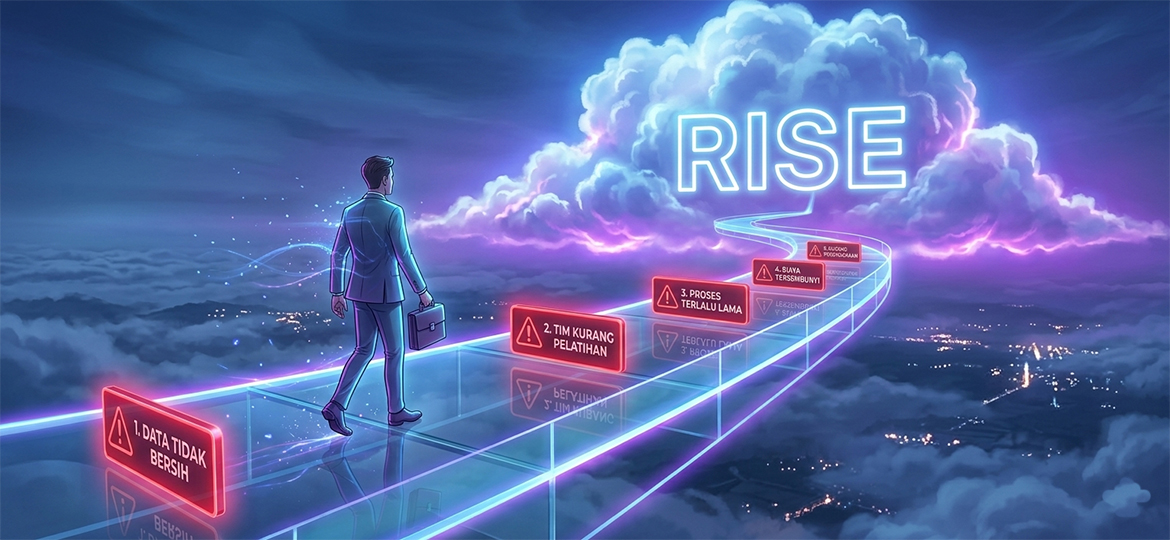
When it comes to cloud migration, almost every company is heading in that direction right now. One of the most talked-about options lately is RISE with SAP. Unfortunately, behind all the promises of efficiency and flexibility, the reality on the ground often looks nothing like the sales presentation. A fair number of projects end up stalling midway because internal teams underestimate what actually needs to be prepared.
Moving to RISE with SAP is not simply a matter of copy-pasting data from your office's local server to the cloud. This is a sweeping overhaul of how your business operates. Handle the preparations carelessly, and you should brace yourself for ballooning costs and operations that suddenly grind to a halt.
In this article, we'll dissect the most common blunders that derail these projects — and how to get ahead of them before it's too late.
Why Is RISE with SAP the New Standard?
Before we get into the list of mistakes, it's worth taking a moment to understand why everyone is suddenly talking about this solution.
Simply put, RISE with SAP is an all-inclusive transformation subscription package — or Business Transformation as a Service (BTaaS). SAP bundles the S/4HANA Cloud license, cloud infrastructure (with the option to run on AWS, Azure, or Google Cloud), and managed services system administration all under a single umbrella contract.
For management, this model is understandably attractive. No more headaches over physical server maintenance costs, security is guaranteed to global standards, and scalability is highly flexible to keep pace with business growth in 2026 and beyond.
5 Blunders That Most Often Derail a Migration
Drawing from real-world experience, here are the five core issues that most frequently become major stumbling blocks during the transition:
1. Forcing Legacy Customizations — Violating the Clean Core Rule
This is the most widespread issue. Many companies want to move to a modern cloud system, yet stubbornly insist on carrying over all the Z-development customizations they built over the past decade or more in their old system.
The result? The new system becomes extremely bloated and sluggish, and you'll run into trouble every time SAP releases a new version update. The ground rules in the cloud are straightforward: keep your system core clean — Clean Core. If you genuinely need highly specific customizations, build them outside the main system using SAP BTP (Business Technology Platform). This way, your SAP core stays standard and can be upgraded at any time without friction.
2. Migrating Garbage Data Into a New System
There's an old principle that never fails: Garbage In, Garbage Out. If your master data in the old system is already a mess — duplicate vendor records, incomplete customer addresses, or inaccurate inventory counts — moving it into S/4HANA Cloud will only accelerate the chaos in your business operations.
Many project teams rush into migration without first conducting a thorough data cleansing exercise. The consequence? On day one of the new system going live, transactions immediately grind to a halt due to failed data validation. Clean your data before you move it.
3. Underestimating Employee Adoption (Change Management)
Remember: no matter how sophisticated the system you purchase, it's still people who operate it. Projects often fail not because of a coding problem or a server outage, but because employees refuse to use the new system — they feel confused and unfamiliar with it.
Don't let your team get blindsided when the system suddenly changes completely. Change Management isn't just about producing a user guide document — it's about how you train your people, listen to their concerns, and support them from day one of preparation all the way through to when the system is truly running smoothly.
4. Overlooking Integration Mapping With Other Applications
Your ERP system doesn't operate in isolation within your business. There will inevitably be a POS system, a third-party warehouse management system, or an e-commerce platform that needs to exchange data with SAP.
Chaos typically erupts when these integrations are only thought about as the Go-Live date approaches. Slow connection issues, data security concerns, and automatic synchronization failures tend to surface all at once. Make sure the connection and integration architecture is designed thoroughly from the very beginning of the project.
5. Picking an Implementation Partner Based on the Lowest Bid
Choosing an IT consultant or implementation partner solely on the basis of the cheapest proposal is the riskiest decision a company can make. Cloud migration demands an entirely different skill set compared to a traditional on-premise SAP installation.
Many local vendors claim they can deliver, yet haven't actually grasped the SAP Activate methodology that is the current standard for cloud migration. An inexperienced partner will typically struggle to translate your business requirements into a proper cloud configuration — leading directly to project timeline overruns and unnecessary cost blowouts.
RISE with SAP Migration Readiness Checklist
Before you go any further and sign any contracts, work through this simple checklist to gauge how prepared your team truly is:
|
Key Area |
Key Question |
Status (Yes / No) |
|---|---|---|
|
Mindset |
Has the team agreed to minimize customizations (Clean Core)? |
|
|
Data Condition |
Have outdated and duplicate master data records been cleaned up? |
|
|
Team Readiness |
Is there a dedicated budget and training plan in place for end users? |
|
|
Technical |
Has a complete list of all non-SAP applications requiring integration been compiled? |
|
|
Vendor |
Does your chosen partner hold a valid RISE with SAP certification? |
How to Get Ahead of Failure From the Start
To avoid becoming the next cautionary tale in a failed project, the first step is to conduct an honest self-assessment of your current IT systems. Don't paper over data problems or internal process complexities just to appear ready.
Second, follow the best practices that SAP has already provided. There's no need to invent untested methods of your own. Third, ensure that information security and network integration are on the agenda from week one of the project — not tacked on as an afterthought at the end.
Finally, recognize that this migration demands long-term consistency. Maintaining data quality and ensuring your employees are comfortable with the new system are the keys to making sure this major investment actually delivers tangible returns for your business.
Conclusion
Moving to RISE with SAP is a strategically sound step for the future of your business. But the journey there requires thorough planning and disciplined execution. By avoiding the five fatal mistakes we've covered here — from keeping your system core clean to choosing the right partner — your transformation journey will be far safer and far less dramatic.
Don't let your company's grand plans come to nothing because of a wrong move at the start. If you want to ensure this migration proceeds without significant technical hurdles, discuss your transformation plan with a consultant who has a proven track record.
Let's build a more agile, future-ready operational system together with our expert team.
Other News