Blog

7 Digital Insights for Mid-Sized Automotive Companies to Dominate the Market in 2026
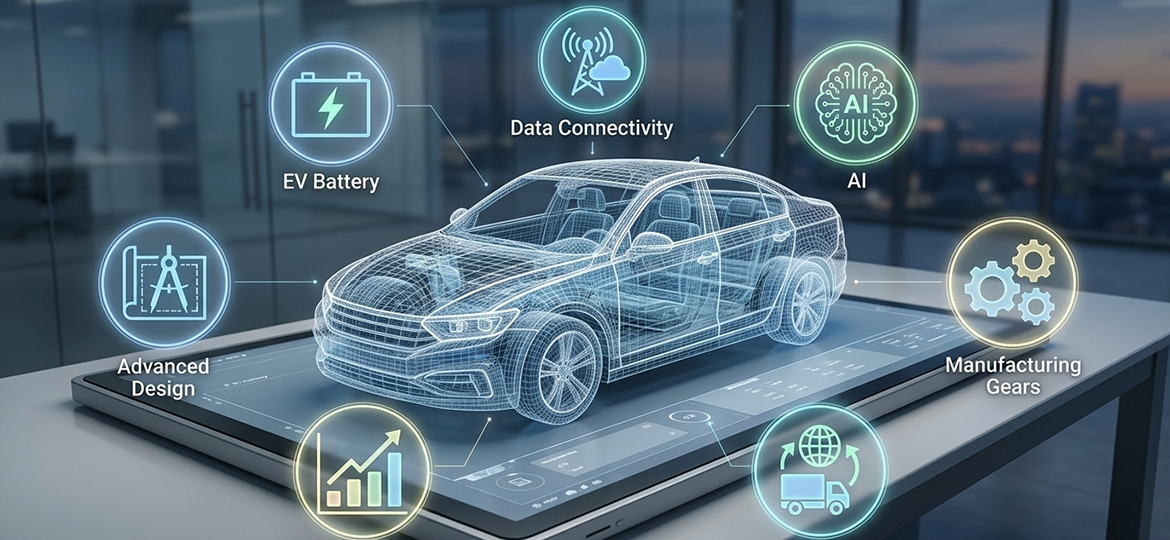
Today, the automotive industry is no longer just about engine sophistication on the racetrack, but rather a battle of algorithms on smartphone screens. For mid-sized automotive companies, competing with global giants possessing limitless marketing budgets might feel like an ant trying to stop an elephant. However, in the digital era of 2026, size isn't everything. Agility and strategic precision are far more valuable than simply throwing money at billboards slowly weathering away.
The Indonesian automotive market is experiencing a tectonic shift. Data from Gaikindo shows that although buying interest remains stable, the path consumers take before finally shaking hands with a salesperson in the showroom has completely changed. They no longer arrive empty-handed; they come armed with hours of research from YouTube, community reviews, and detailed price comparisons.
Why Must Mid-Sized Companies Go "Digital-First" Now?
Why is there an urgency now? The answer is simple: consumer behavior will never return to analog mode. According to a recent report by McKinsey & Company, over 80% of car buyers start their journey online. Micro-moments—a term describing the exact moment someone spontaneously searches for information on their phone—now absolutely determine whether your brand makes it onto their consideration list or gets tossed into the digital trash bin.
For mid-sized companies, a digital-first approach is not merely a trend, but a survival strategy. Digital marketing offers measurable ROI efficiency, deep personalization capabilities, and the opportunity to appear on the front lines of search engines alongside the big names.
Read also: Zero Downtime 2026: How Artificial Intelligence (AI) is Transforming Factory Maintenance into Predictive Operations
7 Strategic Automotive Digital Insights
-
Omnichannel Optimization: Showroom & Website Synchronization
In 2026, the barrier between the virtual and physical worlds has officially collapsed. A prospective buyer might see your ad on Instagram during their lunch break, configure their car's color on the website at night, and only visit the dealership on the weekend.
The challenge for you is to prevent information amnesia. When consumers arrive, your sales staff must not be unaware that they have already spent time studying hybrid features on your website. Integrate tracking systems so that the Live Chat on the website connects directly with sales consultants at the nearest branch. Your website must be an interactive storefront reflecting real-time unit stock.
-
Leveraging First-Party Data (CRM) Amidst the Cookie Apocalypse
The digital marketing world is mourning the loss of third-party cookies. This means you can no longer rely on third-party data to target ads. The solution? Build an asset in the form of First-Party Data.
Instead of casting a wide net with expensive ads, it's better to have a list of 1,000 high-quality prospects in your own CRM system. Provide added value so visitors willingly share their data, for example, through an Engine Maintenance Guide E-book or Priority Test Drive Access. A smart CRM will help you automate personalized marketing, ensuring the message that reaches prospective buyers feels highly relevant, rather than just inbox spam.
-
Immersive Video Marketing & Virtual Test Drives
Lengthy specification texts are now being left behind. Consumers want to experience the vehicle before physically touching it. Use short-form videos to showcase benefits not written in the brochure, such as how easy it is to fold the third-row seats or how soundproof the cabin is during a rainstorm.
Provide a Virtual Experience on your website. Let them change the car's color or explore the interior in 360 degrees via their phones. This instills a sense of ownership even before the car engine is started for the first time in front of their house.
-
Local SEO: Becoming King in Your Own Backyard
A fatal mistake for mid-sized companies is trying to compete nationally for broad keywords like "Buy New Car". That is a bloody battlefield. A smarter strategy is to master Local SEO.
Ensure that when someone in your city searches for "Nearest authorized repair shop" or "SUV Dealer in [City Name]", your business appears at the top. Optimize your Google Business Profile with the latest photos and five-star reviews. Remember, one positive review from a neighbor is trusted far more than a thousand sweet promises in a television commercial.
-
Hyper-Personalization through WhatsApp Business API
In Indonesia, WhatsApp is the pulse of communication. However, do not use it to spam. Use the WhatsApp Business API to provide highly personalized services. Send periodic service reminders, vehicle registration (STNK) delivery status updates, or trade-in offers right when a customer's installment period is about to end. Humanized and responsive communication will build loyalty that is hard for competitors to shake.
-
Micro-Influencer Strategy: Building Community Trust
Instead of paying superstars exorbitant fees who might not understand engine technicalities, it's better to collaborate with Micro-Influencers or local automotive communities. They have a loyal follower base and a much higher level of trust. Honest testimonials from them feel like recommendations from old friends, not just acting in front of a camera.
-
Personal Data Protection Law (UU PDP) Compliance in Data Management
Last but most crucial is compliance with the Personal Data Protection Law (UU PDP). In 2026, data security is a part of customer service. Ensure every piece of prospect data you collect has received clear consent. Companies that are transparent in managing data will win the consumer's sense of security—a highly valuable currency in this cyber era.
Comparison Table: Traditional vs. Digital Marketing
| Aspect | Traditional Marketing | Digital Marketing (2026) |
| Target Audience | Massive & Broad (Unfocused) | Hyper-Personal & Targeted |
| Result Measurement | Estimated / Approximated | Accurate & Real-Time |
| Interaction | One-Way (Passive) | Two-Way (Interactive) |
| Cost | High (Upfront Cost) | Flexible (Performance-Based) |
| Data Retention | Difficult to Manage | Integrated into CRM |
Conclusion & Action Steps
Dominating the 2026 automotive market for mid-sized companies isn't about who places the most ads, but rather who best understands their customers' digital journeys. Start by organizing your CRM data, optimizing your local presence on search engines, and don't be afraid to experiment with more humanized video content.
Other News