Blog

Building a Resilient Business: When SAP Sustainability Solutions Are No Longer Just "Window Dressing"
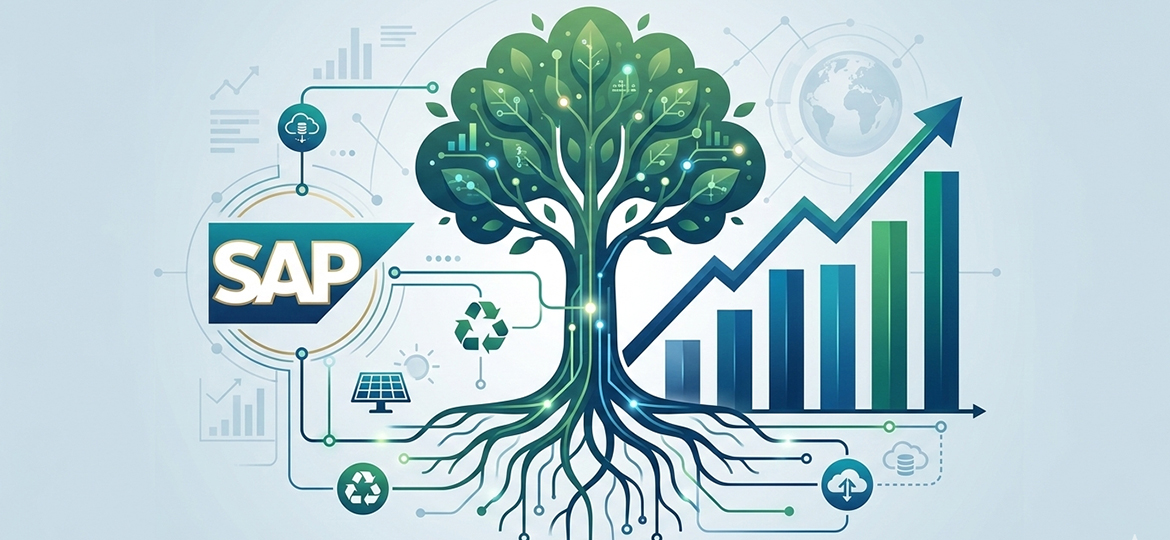
Amidst the hustle and bustle of today's market dynamics, I see one major shift: the term sustainability has leveled up. It is no longer just sweet jargon in a brochure or a marketing team's slogan to beautify the company's image. Today, sustainability has become the operational heart that determines whether a business will remain relevant or slowly lose its place in the industry.
One thing I often encounter during discussions in boardrooms is looks of doubt. The question is always the same: "How can we comply with ESG standards without bleeding our financial statements dry?" To be honest, that is a very human anxiety. However, the answer I offer is usually simple yet fundamental: the key is not in manually increasing your team's workload, but in the precision of digitizing environmental data.
More Than Just "Checking a Box"
Adopting sustainability solutions from SAP is actually not about finding the fastest way to comply with regulations just to avoid sanctions. For me, it is about strengthening the company's own resilience.
During my years of guiding ERP transformations, I have noticed a rather concerning pattern: many companies still let their emission and environmental data "scatter" outside the core system. Yet, leaving data unintegrated is tantamount to allowing cost-efficiency leaks to occur undetected. Over the next three to five years, this data integration will become a clear divider between agile market leaders and those lagging behind.
Why Sustainability Is Now a "Core Business"
Let's be honest, in the past, sustainability reports were often considered merely an annual administrative task for the CSR team, frequently only tackled as the deadline approached. However, here in 2026, the situation has completely changed. Transparency is now the new currency.
Sustainability is actually about resource efficiency. If we look through the lens of the UN SDGs, every step of energy savings or raw material optimization actually has a direct impact on the company's bottom line or financial health. In Indonesia itself, OJK regulations (POJK No. 51/2017) already very clearly mandate this report. Attempting to do it manually without the support of an SAP-class system will only make the process slow, prone to errors, and most dangerously, difficult to pass audits.
Let's Discuss Further
If your company still feels overwhelmed consolidating carbon emission data from various division lines, you are not alone. Do not let data disorganization hinder your grand vision. Our team is ready to assist you in comprehensively implementing SAP Sustainability Solutions, ensuring operations remain compliant yet far more efficient.
Schedule Your Strategic Consultation Here
5 Strategic Benefits of SAP Sustainability Solutions
-
Data Transparency Through the "Green Ledger" Concept
SAP's biggest recent innovation is the Green Ledger. Imagine being able to see the carbon footprint per product unit as detailed as you view raw material costs in an income statement.
In-depth Analysis: With SAP, carbon data is no longer an estimate or industry average, but actual data from supply chain transactions. This allows management to make data-driven decisions to select greener, yet still cost-efficient, suppliers.
-
Regulatory Compliance Automation (ESG Reporting)
One of management's biggest pain points is the multitude of reporting standards like GRI, SASB, and TCFD. SAP Sustainability Control Tower allows companies to automate data collection from thousands of sensor points and ERP modules.
Field Experience: In implementations I've handled, this automation was able to cut annual report preparation time by up to 40%, giving the financial team room to focus on strategic analysis rather than mere data input.
-
Supply Chain Optimization and the Circular Economy
Through the SAP Responsible Design and Production module, companies can monitor the product lifecycle right from the design stage.
Tangible Benefit: You can automatically calculate plastic tax costs or environmental levies across various export destination countries. This ensures your profit margins are maintained despite sudden global environmental regulatory changes.
-
Access to Green Financing
The banking world is now paying more attention to companies with high ESG scores. Data generated from SAP systems is auditable and credible. Global investors place more trust in reports pulled directly from an integrated ERP system compared to manual reports that are prone to manipulation (greenwashing).
-
Cost Efficiency Through Energy Management
Reducing the carbon footprint often means reducing energy waste. With IoT integration in SAP, manufacturing companies can identify which machines are consuming excess energy and perform preventive maintenance before costly breakdowns occur.
Understanding the SAP Sustainability Ecosystem (Module Comparison)
To assist you in determining implementation priorities, here is a table of the main functions within the SAP ecosystem:
| SAP Module | Main Function | Business Value-Add |
| Sustainability Control Tower | Integrated ESG dashboard | Reporting & audit speed |
| Product Footprint Management | Emission calculation per product | Emission-based pricing |
| EHS Management | Occupational safety & environment | Operational risk mitigation |
| SuccessFactors (Social ESG) | Diversity management | Social aspect compliance (Workforce) |
Why Choose the Right Implementation Partner?
Technology is just a tool; implementation strategy is the key. As a trusted ERP solution provider, we ensure your SAP system transition runs smoothly without disrupting your core business operations. Get a comprehensive guide on your company's Net Zero roadmap with us. [Learn About Our Services].
The Real Challenge: Overcoming "Data Silos"
As an SME, I often find that the biggest challenge lies not in the software, but in sectoral egos within the company. Operational departments have their own data, while the sustainability team has different data.
SAP solutions break down these barriers. However, successful implementation requires commitment from the C-Suite level. Without a clear vision, even the most advanced sustainability modules will simply become an expensive data warehouse. I always advise clients to start with "Quick Wins," such as automating Scope 1 and 2 emissions reporting before stepping into the more complex Scope 3.
An Investment for the Future
The benefits of implementing SAP sustainability solutions go far beyond simply maintaining the company's image. It is about risk mitigation, resource efficiency, and maintaining competitiveness in a global market that increasingly demands transparency. In an era where data is everything, ensuring that every gram of emission is accurately recorded is a smart step to ensure every rupiah of profit is achieved in a sustainable way.
Other News