Migration to IaaS vs PaaS: Dissecting the Right Choice for Your System Needs

Migration to IaaS vs PaaS: Dissecting the Right Choice for Your System Needs
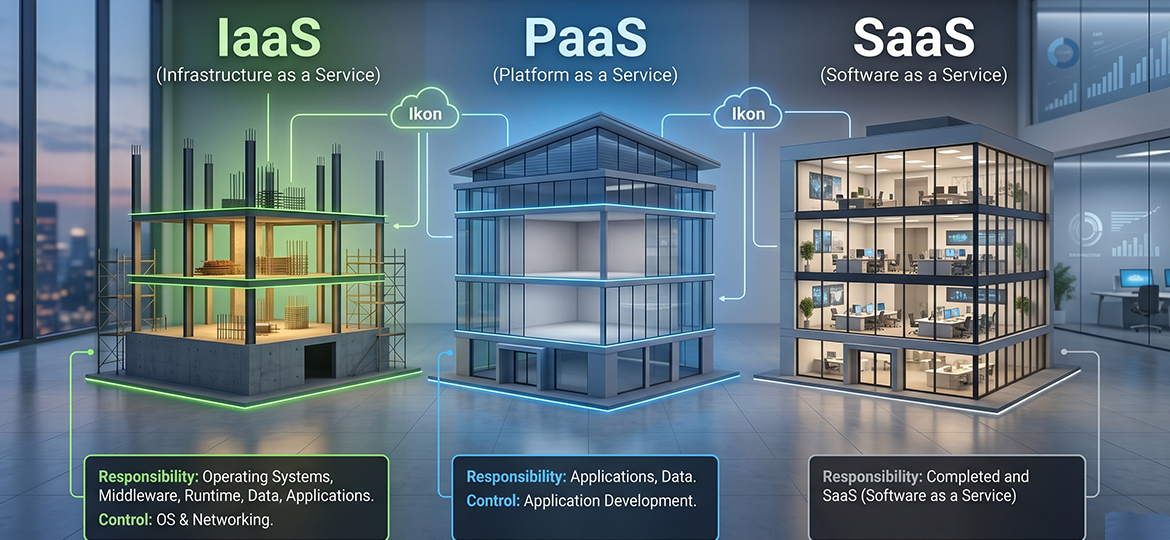
Many IT teams spend months planning workload migrations to the cloud, only to end up with ballooning operational costs or bottlenecks in developer productivity. The root cause often stems from a fundamental mistake when designing the architecture: choosing between Infrastructure-as-a-Service (IaaS), which requires your team to manage servers, storage, and network configurations independently for full control, or Platform-as-a-Service (PaaS), which instantly automates backend infrastructure provisioning so developers can focus purely on writing code. An incorrect decision at this early stage carries a high risk of creating technical debt that will burden system performance in the future.
Being stuck at a crossroads when planning a Migration to IaaS vs PaaS is a real challenge, but you don't need to rely on mere guesswork. This article is specifically designed to provide a concrete and applicable decision framework, going beyond just the theoretical definitions found in IT documentation. Through this guide, you will technically dissect when a system needs the OS-level configuration flexibility of IaaS, when to leverage the deployment efficiency of PaaS, and how to execute the transition so your cloud architecture remains scalable and cost-optimal.
Understanding the Landscape: Why This Decision is Increasingly Crucial in 2025
Cloud migration may not be new to the IT ecosystem, but the complexity of today's workloads forces companies to be much more precise. Based on the latest Gartner projections, global spending on public cloud services is expected to surpass $723.4 billion in 2025, surging 21.5% from the previous year. This figure underscores that a haphazard migration strategy will only lead to architectural inefficiency.
Market dynamics reveal two main trends that make the Migration to IaaS vs PaaS decision so crucial:
-
Surge in Compute Power Demand (IaaS): Gartner notes IaaS as the fastest-growing segment, reaching 24.8%. High-level computing needs for AI/ML demand low-level infrastructure access that can only be facilitated by an IaaS environment.
-
Focus on Deployment Acceleration (PaaS): IDC projects the combined IaaS and PaaS market will surpass $400 billion in revenue in 2025. PaaS attracts engineering teams because it abstracts the OS layer, freeing them from the burden of maintenance to accelerate Time-to-Market.
IaaS vs PaaS: Head-to-Head Comparison
Understanding these differences is crucial, especially regarding the Shared Responsibility Model concept, where security responsibilities are divided between you and the cloud provider.
| Architectural Dimension | IaaS (Infrastructure-as-a-Service) | PaaS (Platform-as-a-Service) |
| Level of Control | Full. Root access to OS, network, and storage. | Limited. Focuses on application code and environment. |
| Cost Structure | Pay-as-you-go based on instance allocation. | Predictable, based on code execution/memory. |
| Deployment Speed | Slow. Requires OS and middleware configuration. | Very Fast. Directly deploy source code. |
| Complexity | High. Requires dedicated DevOps/SysAdmin teams. | Low. OS and runtime are managed automatically. |
| Security | You secure everything from the OS to the application. | Provider secures the OS; you focus on data. |
| Best For | Legacy applications, AI/ML, kernel customization. | Microservices, CI/CD, cloud-native applications. |
Decision Framework: 5 Key Questions Before Choosing
Use these five technical audit questions to accurately map your architectural needs:
-
How much infrastructure control do you need?
-
IaaS: Choose this if the system requires OS kernel customization or root access for legacy software.
-
PaaS: Choose this if you use a standard stack and want to focus on optimizing source code.
-
-
How mature is your DevOps team?
-
IaaS: Requires a capable team for patching, monitoring, and infrastructure maintenance.
-
PaaS: The right solution for limited teams because the cloud provider automates backend management.
-
-
What type of workload will be migrated?
-
IaaS: The safest route for large monolithic systems (lift-and-shift) or heavy relational databases.
-
PaaS: The natural habitat for stateless microservices and applications requiring dynamic auto-scaling.
-
-
What is your short-term budget vs. long-term TCO?
-
IaaS: Initial costs seem cheap, but TCO risks ballooning due to manual operational costs.
-
PaaS: Initial costs are more premium, but it reduces TCO by cutting down maintenance work hours.
-
-
How critical are your compliance & data sovereignty?
-
IaaS: Allows for custom security architectures and physical data isolation (Dedicated Hosts).
-
PaaS: Already meets standards (SOC 2/PCI-DSS), but control over the physical location of data is more limited.
-
Common Migration Patterns: The 7 Rs Framework & Ideal Positioning
Based on industry standards (AWS 7 Rs), here is the mapping of transition routes:
-
Rehost (Lift-and-Shift) → IaaS: Moving applications without modifying code. Requires exact OS replication as on-premise.
-
Replatform (Lift-and-Reshape) → Transitional PaaS: Using managed database services to cut down patching burdens without thoroughly rewriting code.
-
Refactor / Re-architect → Extensive PaaS: Overhauling the architecture into microservices. A PaaS/Serverless environment is mandatory to achieve high scalability.
Hybrid Scenario: Using IaaS and PaaS Together
The best architectures are often born from a mix-and-match approach to cover the weaknesses of each service:
-
Core Database in IaaS & Frontend in PaaS Pattern: Using IaaS for massive databases that need kernel-level performance tuning, while web applications reside on PaaS for auto-scaling.
-
Strangler Pattern (Legacy in IaaS, New Features in PaaS): Maintaining core systems in IaaS for stability, while new modules are built agilely on PaaS platforms.
This hybrid implementation is proven to be capable of cutting time-to-market by up to 40% without sacrificing control over sensitive data.
Conclusion
There is no universal choice in the Migration to IaaS vs PaaS. The best cloud architecture is an ecosystem capable of balancing infrastructure control with operational speed. Ensure you perform precise workload mapping before executing a migration to avoid technical debt in the future.
Executing a complex IT architecture transition requires technical expertise to keep the system safe from downtime and budget waste. If your team needs expert assistance in mapping workloads and selecting the most precise cloud model, Soltius Indonesia is ready to be your strategic partner.
As a leading IT consultant and cloud solution provider, Soltius delivers end-to-end migration services specifically designed to minimize your business's operational risks. Don't let your system be hindered by outdated architecture. Consult your migration strategy with our experts at [Insert Soltius Product/Contact Page Link] today!
Other News