Blog

Reducing HANA Database Licensing and Infrastructure Costs with Smart Data Archiving Strategies
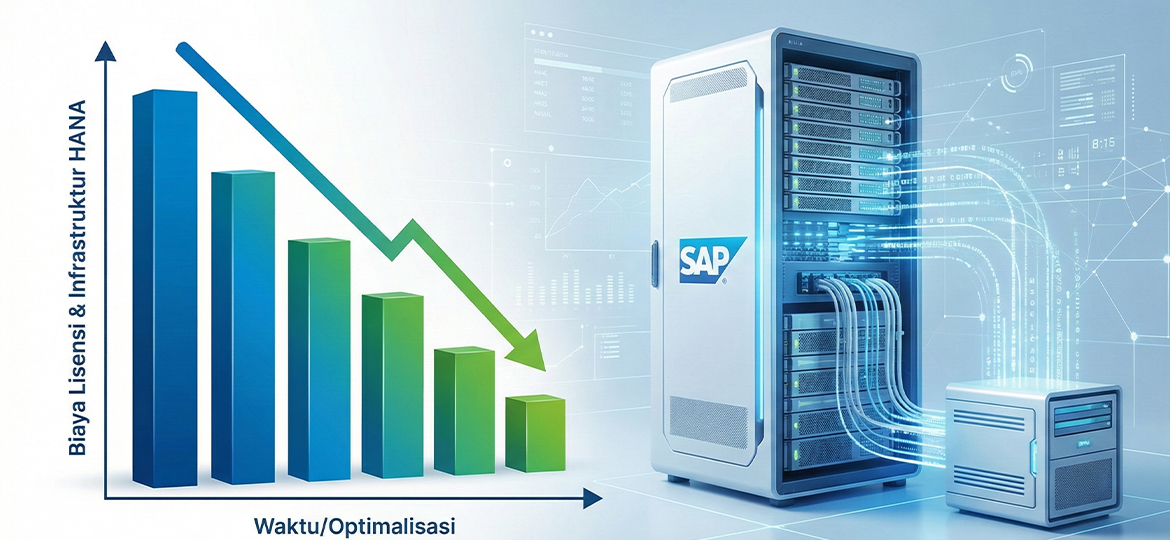
Digital transformation often brings a paradox. On one hand, companies want systems that are fast, real-time, and reliable. On the other hand, licensing and infrastructure costs continue to balloon as data grows. This is the dilemma experienced by many organizations that rely on the HANA Database as the backbone of their SAP systems. Unknowingly, rarely used historical data becomes an expensive hidden burden.
In the initial phase of implementation, the HANA Database provides extraordinary performance. However, over time, transaction tables expand, data volumes increase, and memory requirements surge. The impact is not only on system performance but also on capacity-based licensing costs and increasingly high hardware requirements.
Why Do Database Costs Keep Increasing?
Most organizations store all data in their production systems "just in case." In reality, not all data holds the same operational value. Old transaction data, historical documents, or inactive logs often remain in primary storage. In a HANA Database, this condition becomes critical because in-memory technology places data directly in RAM—and RAM is not a cheap component.
Without proper management, companies get trapped in a cycle of server upgrades, storage expansion, and licensing increases that could have otherwise been avoided.
Data Archiving Strategy: More Than Just Moving Data
Modern data archiving does not mean throwing data away. On the contrary, this strategy aims to move old data from the main system to more efficient storage media without losing access or violating regulatory compliance.
In the context of the HANA Database, proper archiving is capable of:
-
Reducing the in-memory data footprint.
-
Maintaining daily transaction performance.
-
Lowering the need for infrastructure expansion.
-
Optimizing SAP licensing costs.
In other words, data remains available when needed but no longer burdens the core system.
The Real Impact of Archiving on System Performance
When active and historical data are properly separated, the system becomes lighter. Queries run faster, batch processes become more stable, and user response times increase significantly. For organizations with high transaction volumes, archiving in the HANA Database often provides an instant impact that can be felt by both business and IT teams.
Furthermore, a lean system opens room for innovation. Companies can focus on developing analytics, AI, or automation without worrying about infrastructure being overwhelmed.
The Role of a Partner in an Effective Archiving Strategy
Not all archiving can be done haphazardly. The wrong strategy risks disrupting data integrity or business processes. This is where a technology partner becomes crucial.
Soltius Indonesia, through soltius.co.id, is known as an SAP partner that understands both local business characteristics and the technical complexities of SAP. Their approach is not just technology-based, but also based on business processes and goals.
Soltius in Database Management: In the journey of using SAP, many corporations do not realize that old information gradually turns into a burden. The system still operates, but it feels increasingly heavy, ineffective, and expensive to maintain. The obstacle is not because of the SAP system itself, but because data is allowed to accumulate without direction. Soltius is here to help companies clean up this chaos with sustainable database management methods.
Supported by SAP experts who have handled various business sectors, Soltius understands that every corporation has a different database. There is no "one size fits all." It all starts with a comprehensive analysis of the data's condition, followed by formulating an archiving strategy aligned with actual business needs.
This method is highly suitable for application before or after migrating to SAP S/4HANA, whether in on-premise, hybrid, or cloud environments. Through careful analysis, a mature archive landscape design, and the application of SAP best practices, Soltius helps systems remain lean, stable, and agile in following the rhythm of business growth without technical disruptions.
This approach ensures that archiving is not only efficient but also aligned with the company’s digital roadmap.
Avoiding Common Mistakes in Archiving
Many organizations delay archiving because it is considered an "extra" project. In fact, delaying means allowing costs to continue rising. Another mistake is archiving without mature business analysis, which can make important data difficult to access later.
In the HANA Database, a smart strategy always starts with understanding which data is truly active, which is historical, and what the usage patterns are. With this approach, archiving becomes an investment rather than just a short-term saving.
Toward a Leaner and More Sustainable System
In an era of efficiency and sustainability, companies are required to be smart in managing their digital assets. Data archiving is not just about cost reduction, but it is the foundation for a scalable system ready for future growth.
With proper management, the HANA Database can remain an innovation enabler without burdening the IT budget. The key lies in strategy, data discipline, and a partner who understands business needs comprehensively.
How Much Licensing Cost Can You Actually Save? Is your data piling up? Are your expenses ballooning? It’s time to turn historical data from a hidden burden into a smartly managed asset. Get an in-depth analysis and a HANA data archiving action plan proven to effectively reduce costs.
Other News