Blog

Sustainability Validation via SAP Green Token: Digital Supply Chain Transparency Strategy
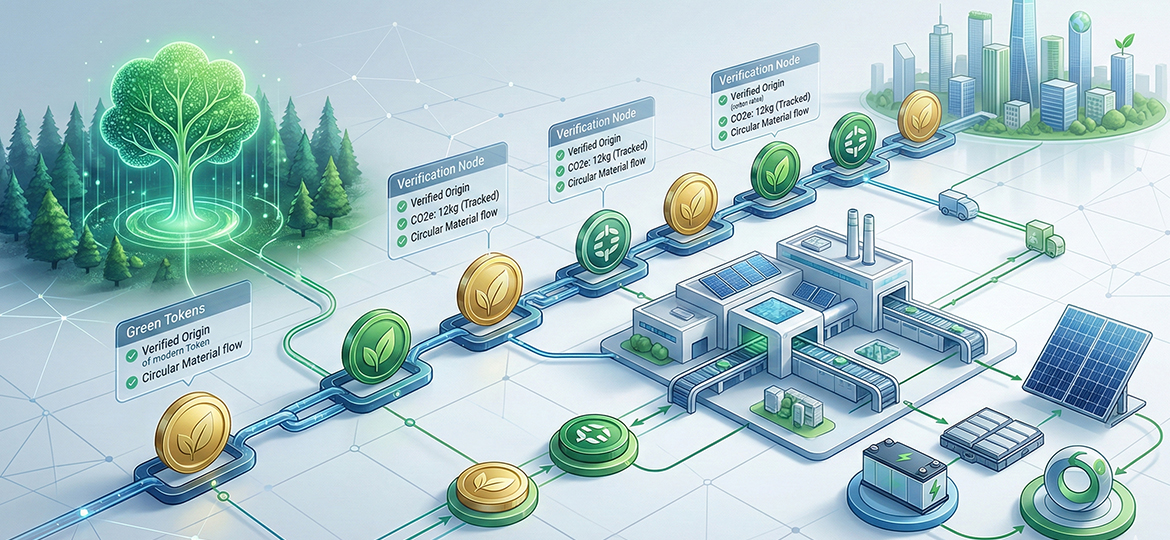
Amidst the hustle and bustle of modern industry increasingly focused on environmental, social, and governance (ESG) parameters, the "sustainable" label is no longer just a sweetener in marketing strategies. Today, global consumers, investors, and regulators are demanding radical transparency regarding every grain of raw material flowing into products. A major challenge arises: how can companies trace the origins of materials within a super-complex supply chain labyrinth? From recycled plastics and certified palm oil to responsibly mined metals.
If your business frequently encounters obstacles when validating sustainability claims without wanting to be trapped in greenwashing risks, you are not walking alone. So many operational leaders now realize that manual audit processes are far from adequate to manage the global data deluge. This is where SAP Green Token comes in as a game-changing breakthrough. Armed with my experience in supply chain digitalization, I will dissect why this technology has become the new gold standard in sustainability validation.
Why Relying on Manual Validation is Now a Business Risk
Old-school audit methods usually still rely on stacks of physical documents, PDF certificate attachments, and spreadsheets sent back and forth between vendors. Referring to reports from the World Economic Forum, transparency in the supply chain is a vital foundation for achieving global decarbonization targets. Unfortunately, manual systems are highly vulnerable to data manipulation, lost information trails at the second-tier vendor level (Tier-2), and unavoidable human error.
For companies in Indonesia focusing on the export market, the absence of a robust digital system can trigger severe regulatory sanctions. Take, for example, regulations like the EU Deforestation Regulation (EUDR) or increasingly widespread carbon tax policies. Weak validation is not just an administrative matter, but a real threat to brand credibility and the long-term lifeblood of your business.
Understanding SAP Green Token: The Power of Blockchain for the Circular Economy
SAP Green Token is a cloud-based solution that optimizes private blockchain technology to safeguard the sustainability attributes of raw materials, from point zero to the end user. Unlike general inventory systems that track physical goods per unit, SAP Green Token was born specifically for industries that process co-mingled materials.
The Power of the Mass Balance Accounting Concept
In industrial sectors such as chemicals, plastics, or agriculture, sustainable materials are often mixed with conventional materials during the production and distribution phases. Physically separating "green" molecules from ordinary materials is impossible. Therefore, SAP Green Token adopts the Mass Balance Accounting scheme.
Following global standards set by ISCC (International Sustainability & Carbon Certification), this system ensures that the number of "green credit" units listed on the final product will never exceed the volume of sustainable materials entering the upstream production system. Through blockchain digitalization, every "token" carrying this sustainability identity cannot be duplicated, let alone forged.
Key Features and Strategic Value of SAP Green Token
Based on my observations while overseeing various digital transformation projects, there are three main pillars that position SAP Green Token as a leading solution:
-
Immutable Ledger (Undisputable Records)
Every shift in ownership and raw material transaction is recorded on a permanent blockchain network. This creates an eternal audit trail. If a supplier tries to enter misaligned data, the system will immediately detect it automatically.
-
Multi-Tier Visibility (End-to-End)
The blind spot for giant companies is usually their ignorance of activities at the supplier's supplier level (Tier-2 and below). SAP Green Token facilitates the exchange of encrypted data across the entire vendor ecosystem, so you get a complete map of your supply chain.
-
ESG Certification and Compliance Automation
Imagine how much time efficiency is created if the audit team no longer has to deal with stacks of paper files. This system digitalizes all certificates, allowing ESG compliance reports to be presented in seconds with perfect precision.
Comparison Table: Traditional Validation vs. SAP Green Token
| Parameter | Traditional Manual Method | SAP Green Token Digital Solution |
| Data Security | Vulnerable to manipulation & loss | Securely encrypted on the Blockchain |
| Audit Process Speed | Takes weeks/months | Runs in Real-time (Seconds) |
| Visibility Scope | Limited to Tier-1 only | Entire Supply Chain (Multi-tier) |
| Mass Balance Accuracy | Manual calculation (Prone to errors) | Automated & Fully verified |
Steps for Successful Implementation with Soltius Indonesia
Implementing cutting-edge technology of SAP Green Token's caliber certainly requires more than just a technical understanding of the software. You need a strategic partner who thoroughly understands the market dynamics and regulations in Indonesia. As an SAP Platinum Partner with a solid track record, Soltius Indonesia is the ideal partner to help your company unite green ambitions with capable technical execution.
Soltius has extensive experience in integrating various SAP modules to create a smarter and more sustainable business ecosystem. With the support of local consultants holding international certifications, Soltius ensures your company's digital transition runs seamlessly, efficiently, and delivers a real impact for all stakeholders.
Don't let your business reputation be threatened by data uncertainty. Start your transparency journey right now by consulting with the Soltius Indonesia expert team here.
Long-Term Benefits for Business Growth
Investing resources in digital sustainability validation is not just an additional cost, but a future asset:
-
Access to Premium Markets: Today's customers don't mind paying more for products with transparently guaranteed origins.
-
Legal Risk Shield: Meeting the demands of international standards like the Corporate Sustainability Reporting Directive (CSRD), which is becoming a global requirement.
-
Operational Optimization: Eliminating overlapping administrative processes and accelerating the rhythm of the company's ESG reporting.
Conclusion: Weaving Trust in the Era of Transparency
The world is transforming towards a circular economy that demands accountability in every line of production. SAP Green Token provides the technological foundation your business needs to validate every sustainability claim honestly and factually. By eliminating doubts through undisputable data, your company is not only helping to preserve the earth but also building solid loyalty from customers.
Ensure your green transformation strategy is guided by the best solutions from SAP and a trusted implementation partner like Soltius. Together, let's realize a supply chain that is not only efficient but also ethical for a better future.
Other News