Blog

The Complete Guide to Modern Restaurant Management Software: Operational Transformation & Profit Strategies in the Digital Era
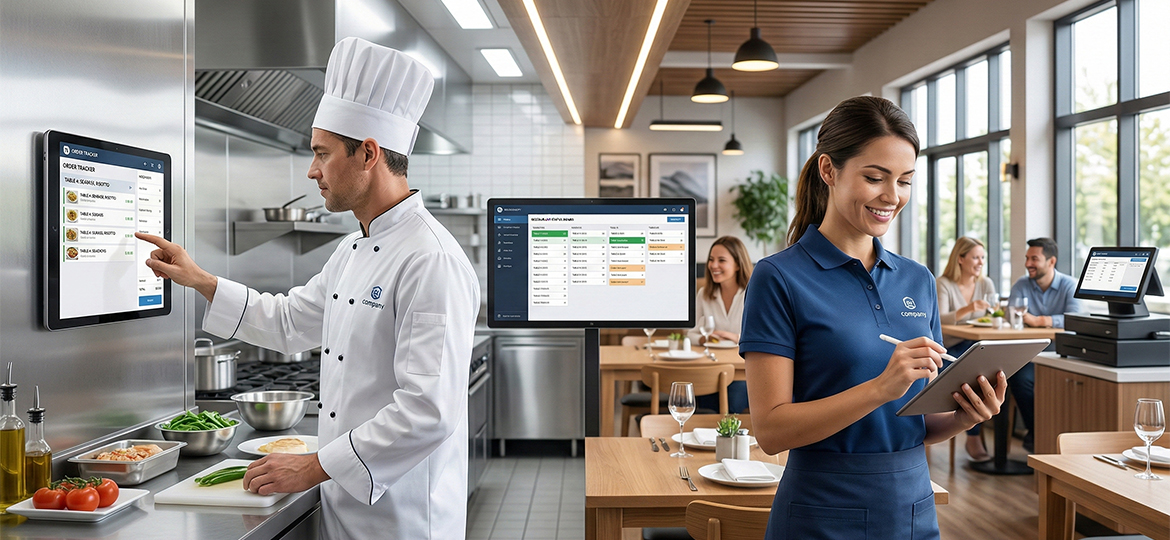
Culinary business profit margins have felt increasingly thin lately, especially when raw material prices continue to rise but the remaining cash at the end of the month shrinks. If you are still stressed about calculating leaked stock discrepancies or having a headache over orders sent to the wrong table due to manual coordination, you are not alone. Restaurant management software is here to take over this burden, plug operational cost leaks, and bring order to the chaos from your front desk to your kitchen area.
In this guide, we will thoroughly unpack how this system works to secure your business. We will dissect the anatomy of an ideal system, let piles of transaction data "speak" like a financial consultant to generate real profit, up to providing a checklist for choosing the most appropriate software. Get ready to transform the way you do business from being entirely manual to being much more measurable and profitable.
Why Traditional Methods Hinder Your Restaurant's Growth
Many F&B entrepreneurs are still hesitant to switch to digital systems because they consider software subscription costs as an additional operational expense (OPEX). In reality, maintaining a manual recording system actually triggers hidden costs that silently "strangle" your business's profit margins every day.
Managing operations in a decentralized manner where front-of-house, kitchen, and warehouse data are disconnected causes management to lose visibility. Here are the points of technical leakage caused by maintaining an unintegrated system:
-
Inventory Discrepancy: Manual recording is highly vulnerable to manipulation and human error. Surprisingly, research by the National Restaurant Association notes that restaurants waste 30% to 40% of their food inventory purely due to poor manual stock tracking.
-
Front-to-Back Communication Distortion: Transferring written order tickets increases the order defect rate. A Restroworks report (2025) even confirms that commercial kitchens waste an average of 4% to 10% of ingredients before serving due to manual preparation errors or spoiled ingredients.
-
Financial Data Latency (Financial Blind Spot): Revenue report reconciliation can only be done during the daily closing process (End of Day). This delay in information flow makes you unresponsive to sales anomalies during rush hours.
Key Components of Modern Restaurant Management Software
To stop all these leaks, you need an integrated digital ecosystem. A modern system will act like an assistant manager that never sleeps, ensuring the front of house and back of house communicate seamlessly.
Cloud POS: The Heart of Real-Time Transactions
A cloud-based Point of Sale (POS) is no longer just a cash drawer. This system records every transaction instantly, allowing you to monitor sales graphs and check best-selling menus directly from your smartphone wherever you are.
Inventory Management & Food Costing
This feature is the main weapon to avoid operational waste. Every time a portion of a menu is sold at the POS, the system will automatically deduct the ingredient portions in the digital warehouse and precisely calculate the Cost of Goods Sold (COGS).
Kitchen Display System (KDS) & Order Automation
Say goodbye to wet, misplaced order tickets or handwriting that is difficult for chefs to read. KDS displays orders directly on the kitchen monitor screen in a matter of seconds, complete with chronological order so that food service is much faster and more accurate.
Profit Strategy: Turning Data into Money
The pile of daily transaction data in your restaurant is like an unmined gold mine; highly valuable, but requiring the right tools to refine it. Restaurant management software doesn't just record rows of numbers, but translates them into business strategies that generate real money.
Let's see clearly how this technology changes the dynamics of your business's margins and profitability:
| Operational Aspect | Without Software (Manual Method) | With Restaurant Management Software |
| Raw Material Costs | High risk of food waste due to inaccurate purchasing estimates. | COGS is kept accurate, automated alerts when stock runs low. |
| Report Reconciliation | Drains hours of time every store closing. | Real-time financial reports, completed in seconds. |
| Promotion Strategy | Relying on instinct, habits, or guesswork. | Targeted and precise thanks to sales data analysis. |
One of the most powerful weapons from utilizing this data is Menu Engineering. By recording every transaction automatically, the system maps out which menus yield high profits but sell poorly, or which menus sell like hotcakes but have thin margins.
Based on this accurate data, you can make immediate strategic decisions. You can gradually increase the price of "star" menus, or train waiters to be more aggressive in recommending the most profitable dishes.
Data Security and Tax Compliance Aspects
Beyond pursuing revenue, F&B business owners are often haunted by bureaucratic matters and the potential for internal fund leaks. This is where a management system acts as both a safe and a digital shield that protects your business assets from various loopholes for fraud.
Fraudulent actions such as receipt manipulation, fictitious discounts, or unilateral order cancellations by staff can be immediately prevented through a multi-layered authorization system (PIN/Special Access). Any unusual activity will be automatically recorded and will trigger a notification on your device.
Furthermore, API integration with local tax reporting (PB1) automatically frees you from the headache of manual calculations at the end of the month. Taxes are immediately set aside from net sales data, minimizing the risk of fines according to some findings.
Checklist for Choosing the Right Restaurant Software (Buyer's Guide)
Out there, there are dozens of vendors providing cashier and operational system services. However, choosing the right Point of Sale (POS) and management system is like hiring an operations manager for the long term; you need one that is reliable, adaptable, and ready to grow with your business.
Before you swipe your credit card to subscribe, ensure the software meets the following four mandatory criteria:
-
Business Scalability: Ensure the system can handle a surge in transactions when your store goes viral, or is easily upgradable in capacity when opening a new branch.
-
Ease of Use (User Interface): The screen display must be intuitive. Your staff should be able to operate the order menu in a matter of minutes, not spending days on training.
-
Open API Integration: This feature is like a language translator that allows your restaurant system to smoothly "converse" with ride-hailing apps, digital wallets, or external accounting systems without errors.
-
Responsive Support Service: When the system suddenly goes down amidst a bustling crowd on a weekend, you need a highly responsive technical team, not just an automated answering machine.
Conclusion: The Future of the F&B Business Lies in Data
Today's culinary industry competition is no longer just about pitting the deliciousness of secret recipes in the kitchen. The key to your victory now lies in how quickly you respond to customer trends and how strictly you maintain operational efficiency.
Technology adaptation is no longer just a trend, but an urgent need to survive. Based on data from Restroworks (Restaurant Automation Statistics, 2025), as many as 51% of quick-service restaurants (QSR) aim to automate most of their operations, such as using self-ordering kiosks to AI-based drive-thrus by 2025. In comparison, full-service restaurants are also catching up with an automation target of around 27% of their operational tasks.
Modern restaurant management software frees you from the shackles of energy-draining manual administration. With accurate sales and stock data in hand, you now have the freedom to stop merely "surviving" and start "expanding".
Are you ready to bring this digital revolution into your kitchen? Soltius is here as a strategic technology partner to help you implement leading restaurant management software solutions tailored to your business scale. Don't let outdated operations hold back your growth pace; consult your F&B digital transformation needs with the Soltius team of experts today!
Other News