Blog

What Kind of ERP is Suitable for Managing Large Warehouses in Indonesia?
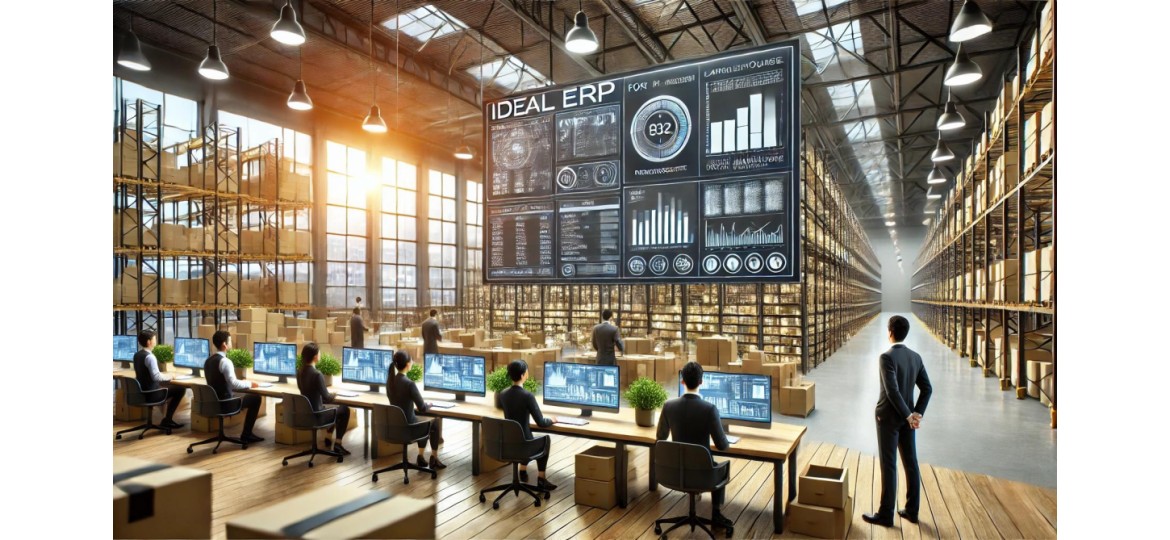
Warehouse management must be optimized, especially in Indonesia, with its vast distribution network and logistical challenges that often hinder operational efficiency. To overcome these challenges, many companies in Indonesia have begun transitioning to Enterprise Resource Planning (ERP) systems.
ERP is a software solution that integrates various business functions into a single unified system, including warehouse management. However, not all ERP systems are suitable for managing large warehouses. So, what kind of ERP is ideal for large warehouse management in Indonesia? Here are the key criteria.
Advanced Inventory Management Capabilities
An ERP system suitable for managing large warehouses must feature highly advanced inventory management tools. In Indonesia, particularly in distribution, manufacturing, and e-commerce sectors, rapid and high-volume turnover of goods is common, especially in large-scale warehouses.
Thus, the selected ERP must be capable of real-time inventory tracking, maintaining accurate stock levels, organizing storage locations, and managing diverse SKUs (Stock Keeping Units). Furthermore, the system should support automated stock management based on demand and turnover levels. It should also provide automatic alerts for low stock levels or discrepancies in inventory, significantly aiding operational efficiency.
Support for Multi-Warehouse Management
When considering the question, "What kind of ERP is suitable for managing large warehouses in Indonesia?" one critical requirement is support for multi-warehouse management. Large warehouses often involve multiple storage locations, especially for companies operating across Indonesia’s expansive geography.
An ideal ERP system should facilitate multi-warehouse management, allowing companies to efficiently manage inventory across various locations. It should integrate data from all warehouses and provide comprehensive insights into stock levels and shipping statuses across locations.
This capability enables companies to respond quickly to delivery needs from different regions, reduce transit times, and minimize logistics costs. Moreover, such a system supports efficient distribution, such as allocating goods to warehouses closest to customers to expedite delivery.
Scalability to Handle Significant Volume Growth
An ERP system for large warehouse management must be scalable, meaning it can grow alongside the business. Large warehouses in Indonesia often experience increased operational volumes as businesses expand. If the ERP system cannot adapt to rising volumes or complexities, its performance may degrade, leading to inefficiencies and disruptions.
The system must also be flexible to accommodate varying business needs, including changes in workflows, company policies, and applicable local regulations. In Indonesia, where market dynamics change rapidly, the ERP must adjust to these shifts without requiring extensive modifications to the core system.
Data Security and Protection
Another crucial criterion for ERP systems suitable for large warehouse management in Indonesia is robust data security. ERP systems store critical information related to inventory, transactions, and company operations. Hence, data security is a top priority.
In Indonesia, where cyber threats are on the rise, an ERP system must include strong security features such as data encryption, multi-factor authentication, and strict user access controls. For companies utilizing cloud storage, it is essential that the ERP offers secure storage options, whether on-premise or cloud-based, along with automatic backup features to safeguard against system failures or unexpected cyberattacks.
Support for Automation and Modern Technologies
Modern ERP systems should support automation, particularly for managing large warehouses. Automation improves efficiency by reducing reliance on time-consuming and error-prone manual processes. Key automation features that should be included in ERP for large warehouses are:
- Automated Picking and Packing: The ERP should support technologies like barcodes and RFID (Radio-Frequency Identification) to speed up picking and packing processes.
- Smart Warehousing: Technologies like robotics or conveyor belts integrated with the ERP can significantly enhance workflow efficiency.
- Demand Forecasting: A good ERP should analyze historical data and market trends to predict future demand, enabling proactive stock management.
Additionally, ERP systems that support mobile devices, such as tablets or handheld scanners, offer a significant advantage. Mobile ERP allows warehouse staff to update data directly from the field, enhancing accuracy and operational speed.
Conclusion
In summary, an ideal ERP system for managing large warehouses in Indonesia must feature advanced inventory management, support for multi-warehouse operations, scalability, robust security, and automation capabilities. For a modern ERP solution with a wealth of advanced features, Soltius is the answer. As a leading IT company, Soltius provides various IT solutions, including SAP SAAS, ERP, CRM, POS, and more.
Other News