Blog

When and Why Should You Move to SAP S/4HANA Following SAP Business Suite Modernization?
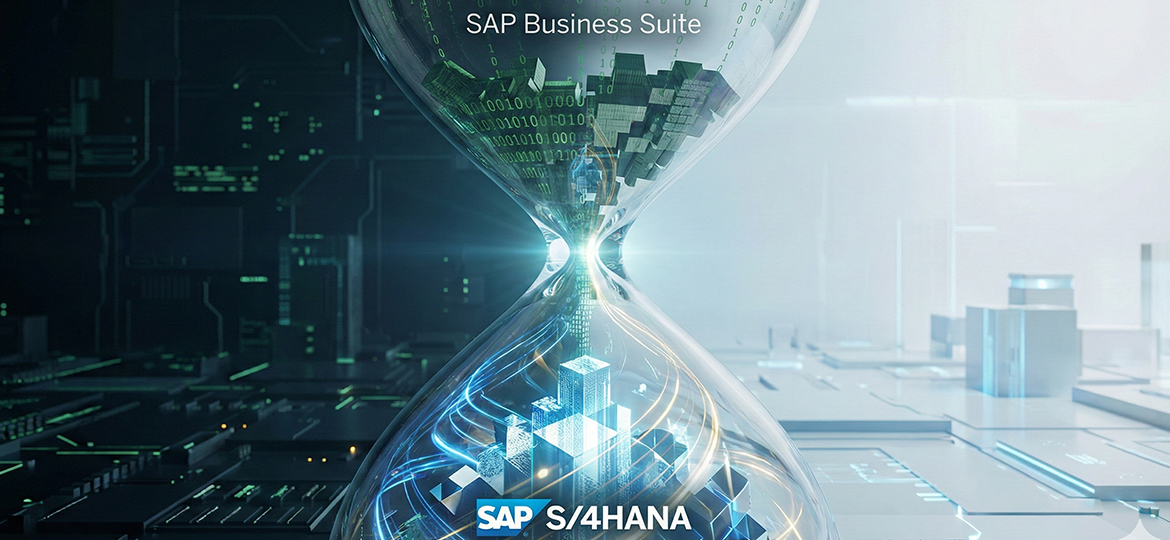
SAP Business Suite modernization must be done now. Discover why sticking with the old system creates hidden costs that eat into your profits.
In the world of SAP Business Suite Modernization, this mindset is no longer a principle of caution, but a high-stakes gamble. Maintaining SAP ECC amidst the current onslaught of digitalization is like stashing cash under a mattress while inflation is skyrocketing. The nominal value may look intact and safe, but the real value is eroding every day without you realizing it.
Many professionals hesitate to migrate due to the massive scale of the project and its technical complexity—and I agree, this is not a task that can be completed overnight. The fear of operational disruption is entirely valid.
When is the Right Time to Move to SAP S/4HANA?
If you are wondering when the best time to start SAP Business Suite Modernization is, the answer is actually simple: Yesterday.
Why the rush? Because SAP has set a firm finish line. This is not just a marketing appeal, but a technical support deadline that, if violated, will place your company in a vulnerable position. Imagine running a multi-billion rupiah company operation on an operating system that no longer has "security police" to protect it from cyber attacks.
Here is the critical roadmap (timeline) that you must mark on your IT strategy calendar:
-
End of 2025 (The Warning Shot): For users of older SAP ECC versions (below EHP 6), the yellow light is already shining bright. Standard support is running thin, forcing you to perform technical upgrades just to survive—a step that consumes costs but provides no significant business value add.
-
End of 2027 (The Mainstream Deadline): This is the sacred date. SAP will stop Mainstream Maintenance for SAP Business Suite 7 (including ECC 6.0 EHP 6-8). After this date, you will no longer receive standard support.
-
2027 - 2030 (The Expensive Extension): You can buy extra time through Extended Maintenance. However, this is an expensive option—costs rise by 2 percentage points from your current maintenance contract value.
-
After 2030 (The End of the Road): There are no more official extension options. You are on your own.
The Cost of Waiting: The High Price of Delay
Many companies think, "Let's just take the Extended Maintenance option until 2030, after all, it only costs a little more."
This is a logic trap. Paying for Extended Maintenance is like paying insurance premiums for a wrecked car at the price of a new car. You are paying premium costs just to keep the system alive ("keep the lights on"), without getting new features, without innovation, and without performance improvements.
Moreover, security risks are at stake. Legacy systems that no longer receive routine security patches are sitting ducks for ransomware. In an era where data is the most valuable asset, do you dare risk the company's reputation to delay migration for one or two years?
Why S/4HANA? More Than Just an Ordinary Upgrade
Many mistakenly believe that modernizing SAP Business Suite to S/4HANA is just a standard version upgrade, like updating an app on a smartphone. In reality, the difference is far more fundamental.
If SAP ECC is a reliable gasoline-powered car, S/4HANA is an autonomous electric vehicle. Both can take you from point A to B, but the way the engine works, the efficiency, and the driving experience are totally different. Here are three key "engine" changes that make S/4HANA so powerful:
Database Revolution (HANA vs AnyDB)
In the old system (ECC), data is stored on hard disks and must be called to memory when needed. This is slow, especially when you are processing millions of rows of transaction data.
S/4HANA uses In-Memory and Columnar Store technology. Imagine the difference like this:
-
Old System (Row-based on Disk): Like searching for a specific word in a pile of thousands of books in a library. You have to walk to the shelf, take the book, open the page, and then find the data.
-
S/4HANA (Columnar In-Memory): The entire content of those "books" is already open and spread out on your desk (RAM) in a neat table format.
The result? Month-end financial reports that usually take hours (or days) to run can now be finished in minutes or even real-time.
Data Structure Simplification ("The Power of One")
One of the finance team's biggest nightmares in the old system was Reconciliation. Why? Because Finance (FI) and Controlling (CO) data were often stored in separate tables. Not to mention tables for material stock and assets.
S/4HANA introduces the Universal Journal concept (the technical table is named ACDOCA). This is the "Single Source of Truth."
What is the impact on business?
-
Eliminate Redundancy: No more data duplication or aggregate tables (totals tables) burdening the system.
-
Instant Accuracy: Sales data, production costs, and stock are recorded in the same journal line. You no longer need to debate whose data is correct during management meetings, because everyone is looking at the same numbers.
User Experience (UX) & Productivity
Let's be honest, the classic SAP interface (SAP GUI) with complex transaction codes (T-Codes) is boring and difficult for new Millennial or Gen Z employees to learn.
SAP Business Suite Modernization brings a drastic facelift through SAP Fiori.
-
Not Just Cosmetic: Fiori changes the way of working from "Function-based" (typing complex codes) to "Role-based" (visual apps).
-
Mobility: If approving a Purchase Order (PO) used to require opening a laptop and logging into a VPN, now a manager can do it via Tablet or Smartphone at the airport.
Brief Comparison:
| Feature | SAP ECC (Old) | SAP S/4HANA (New) |
| Database | AnyDB (Disk Based) | HANA (In-Memory) |
| Report Speed | Batch / Scheduled | Real-time / Live |
| Interface (UI) | SAP GUI (Rigid, T-Codes) | SAP Fiori (Web-based, Responsive) |
| Data Structure | Complex, Many Tables | Simple (Universal Journal) |
Three Migration Paths for SAP Business Suite Modernization
There is no "one size fits all" approach in SAP Business Suite Modernization. A strategy that works for a manufacturing company may not suit a retail company. Generally, there are three main paths you can choose.
Imagine this like a property decision: Do you want to build a new house on an empty lot, renovate an old house, or move only specific items to a new apartment?
1. Greenfield (Re-implementation)
This is the "Start from Zero" approach. You discard the old system along with all its complexities and build a new, clean S/4HANA system (Clean Core).
-
Philosophy: Forget the past, adopt industry standard best practices.
-
Pros: You completely eliminate technical "junk" (junk code) and modifications (Z-programs) that have been irrelevant for decades. The system becomes light, agile, and easy to upgrade in the future.
-
Cons: Historical data from old transactions is usually not brought in (only opening balances/master data).
-
Suitable For: Companies whose old systems are too "dirty" with excessive customization or those wanting to totally overhaul business processes.
2. Brownfield (System Conversion)
This is the "Total Renovation" approach. You take the currently existing SAP ECC system, then perform a technical conversion to move it to the S/4HANA platform.
-
Philosophy: Maintain what has been built, upgrade the engine.
-
Pros: Business disruption is minimal because users are already familiar with the existing data structure. All past historical data remains stored in the new system.
-
Cons: You risk bringing "old diseases" into the new system. If your current business processes are inefficient, the new system will also be inefficient.
-
Suitable For: Companies that have just implemented SAP in the last 5-7 years and have a relatively clean/standard system.
3. Selective Data Transition (Often called Bluefield)
This is the Middle Ground or Hybrid approach. Using specialized software, you can sort which data you want to bring and which you want to leave behind.
-
Philosophy: Keep the good, discard the bad.
-
Pros: High flexibility. You can choose to bring historical data from only the last 2 years, while still cleaning up obsolete program codes.
-
Cons: Project cost and complexity are usually higher because it requires tools and specialized data migration consultants.
-
Suitable For: Large companies with strict historical data audit needs, but who want to perform system consolidation (e.g., merging 3 regional ERP systems into 1 global system).
Conclusion: Modernization is Not a Choice, But a Necessity
The journey of SAP Business Suite Modernization towards S/4HANA is indeed not a project to be taken lightly. It is a marathon, not a sprint. However, delaying the start will only make the finish line feel further away and the track heavier.
Recall our initial premise: the cost of "doing nothing" has now surpassed the cost of migration investment. With the 2027 deadline approaching, the SAP consultant market will become increasingly crowded (bottleneck). If you wait until the "last minute," you will not only pay more expensive license fees but also struggle to find available experts.
S/4HANA is not just a technical fix to keep the system from becoming obsolete. It is the foundation for your business to run faster, make decisions based on real-time data, and stay relevant in an increasingly digital market.
Next Steps You Need to Take Now!
Don't leap into the dark. Before you sign a contract with a vendor or decide on a strategy (Greenfield vs Brownfield), the wisest and most cost-effective first step is to perform an SAP Readiness Check.
This is an initial diagnostic (like a Medical Check-Up) for your ERP system that will provide a clear picture regarding:
-
Health of Customization (Custom Code): How much home-made program code (Z-Programs) is incompatible with S/4HANA?
-
Infrastructure Sizing: How much RAM capacity (HANA) do you really need? (Often smaller than you think due to data compression).
-
Fiori Recommendations: Which mobile applications are relevant to replace your old transactions.
Start the internal discussion today. Form a small team to run the Readiness Check. Data from that report will be your most powerful weapon to convince management that SAP Business Suite Modernization is a strategic investment, not just an IT expense. Consult with our team immediately, contact Sales Phone.
Other News